 Poker stop loss app: when to quit a session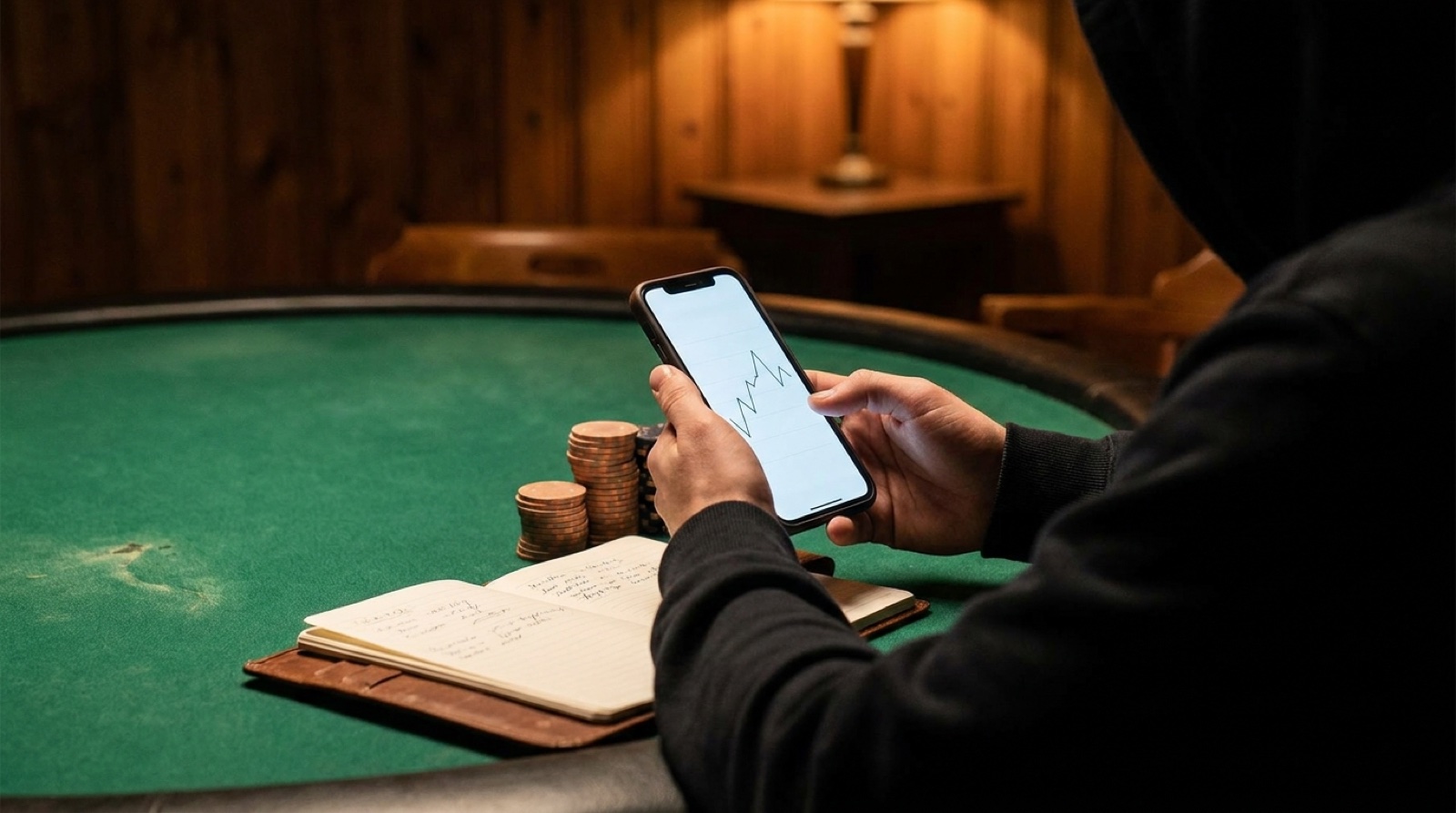
A poker variance tracker will not tell you whether every lost pot was bad luck or bad play. Poker is not that clean. What it can do is stop you from judging your game from one painful night, one heater, or one ugly week.
That matters because variance feels personal when you are the one reloading. You remember the river cards. You remember the cooler. You remember the player who called too wide and got there. Without records, those memories become your whole database.
Good tracking gives you a calmer question: over enough sessions, what is actually happening?
Track your own results: The Poker bankroll tracker app guide explains what Poker Stack records, when an app beats a spreadsheet, and how to review sessions with less guesswork.
What a variance tracker should record
Start with the basics every time you play: date, game type, stakes, location, buy-ins, cashout, hours played, and notes. If you use Poker Stack, this is the habit the app is built around. You log the session while the details are still fresh, then review patterns later instead of trying to rebuild the night from memory.
For variance, the notes matter almost as much as the result. A $700 loss in a soft $1/$3 game after two coolers is different from a $700 loss after chasing every draw in a tough lineup. The number is the same. The lesson is not.
Use a simple tag system in your own notes. Mark sessions where the main story was cooler-heavy, tilt-heavy, game-selection related, tired play, or normal play. The goal is not to prove you were unlucky. The goal is to give future-you enough evidence to review honestly.
Running bad has a shape
A downswing usually shows up as a cluster of losing sessions where the notes still look sane. You played your normal stakes. You did not chase bigger games. You did not add extra hours because you were stuck. You got money in good spots, lost key pots, and left when the game or your mental state was no longer worth it.
That does not make the downswing fun. It just means the right response is bankroll discipline, not a full identity crisis.
The Poker stop loss app guide is useful here because variance gets expensive when it mixes with tilt. A stop loss will not reduce variance. It can stop one bad session from becoming a bankroll problem.
For a broader view of bankroll discipline, read the bankroll management guide. Variance is easier to survive when the stakes fit the bankroll in the first place.
Playing bad also has a shape
Leaks usually leave fingerprints. You move up because you are stuck. You stay in bad games because the table looks splashy but the seats are terrible. Your biggest losses happen late at night. Your session notes keep saying the same thing: tired, frustrated, called too light, bluffed the wrong player, ignored table change.
One bad session proves very little. Five similar notes across five sessions deserve attention.
This is where a tracker beats memory. Memory edits the session to protect your ego. A written session log is colder. It shows whether the same mistake is repeating.
Sample size matters more than one graph
Poker results are noisy. A short-term chart can look dramatic and still mean very little. The PokerNews definition of variance explains the basic idea: results can swing away from expectation for reasons that are normal inside the game.
That is why you should avoid making big conclusions from a tiny sample. Ten hours of live poker is a story. One hundred hours is a better story. Several hundred hours starts to become useful, especially when you compare results by stake, location, format, and mental state.
For deeper background on how swings behave in poker, the Primedope poker variance calculator is worth studying. It shows why even winning players can face long stretches of bad results. The exact numbers depend on win rate and standard deviation, but the lesson is simple: short-term pain is not proof by itself.
Use three buckets when reviewing a downswing
When your results hurt, split the review into buckets.

Download Poker Stack Now
"PokerStack is THE app you need to have as a live poker player."
Poker.com


- Variance: big pots lost in normal spots, coolers, standard all-ins, or high-equity spots that missed.
- Execution: hands where you knew the better decision but did not take it.
- Game selection: sessions where the table, stake, seat, or timing made the game worse than it looked.
This keeps the review honest. Some losses are variance. Some are leaks. Some are not about hand strategy at all, but about choosing the wrong game or playing too long.
If you still use a spreadsheet, compare it with the workflow in Poker bankroll app vs spreadsheet. Spreadsheets can work, but they often fail at the exact moment players need them most: right after the session, when the details are fresh and the mood is not.
What to write after every losing session
After a losing session, write notes before you talk yourself into a cleaner version of the night.
- What was the biggest pot, and was the decision good?
- Did I play my planned stake?
- Did I quit at the right time?
- Was the lineup actually good?
- Was I tired, tilted, rushed, or distracted?
- What is one adjustment for the next session?
This does not need to become homework. A few honest lines are enough. The session recording guide gives a simple structure for what to capture after every session.
Do not use variance as a shield
There is one danger with variance talk: it can become an excuse. If every loss is bad luck, your game never improves. If every loss is a leak, you lose confidence for no reason. Both reactions are expensive.
Better players keep both ideas in the room. They respect variance, but they still review hands. They protect the bankroll, but they still ask whether the game was worth playing. They use results as evidence, not as a verdict.
For hand review and learning away from the table, CardsChat's variance guide, Upswing Poker's explanation of variance, and PokerStrategy's variance overview all give useful background. Just remember that reading about variance is not the same as tracking your own sessions.
The simple review habit
Once a week, review your last few sessions in Poker Stack or your tracker of choice. Look for one pattern, not ten. Maybe your longest sessions are your worst. Maybe one venue keeps costing you money. Maybe you are winning at $1/$3 but taking shots at $2/$5 too early.
That is the point of tracking. The app does not make the decision for you. It gives you enough evidence to make the next decision with less emotion.
If you want a clean starting point, install Poker Stack, log your next five sessions, and write one note after each one. Do not judge the whole experiment after the first session. Give the data a chance to show a pattern.
Related Poker Stack reading
Poker stop loss app: when to quit a session Poker bankroll app vs spreadsheet: which one keeps you honest?
 How to track live poker sessions without a spreadsheet
Read our blog