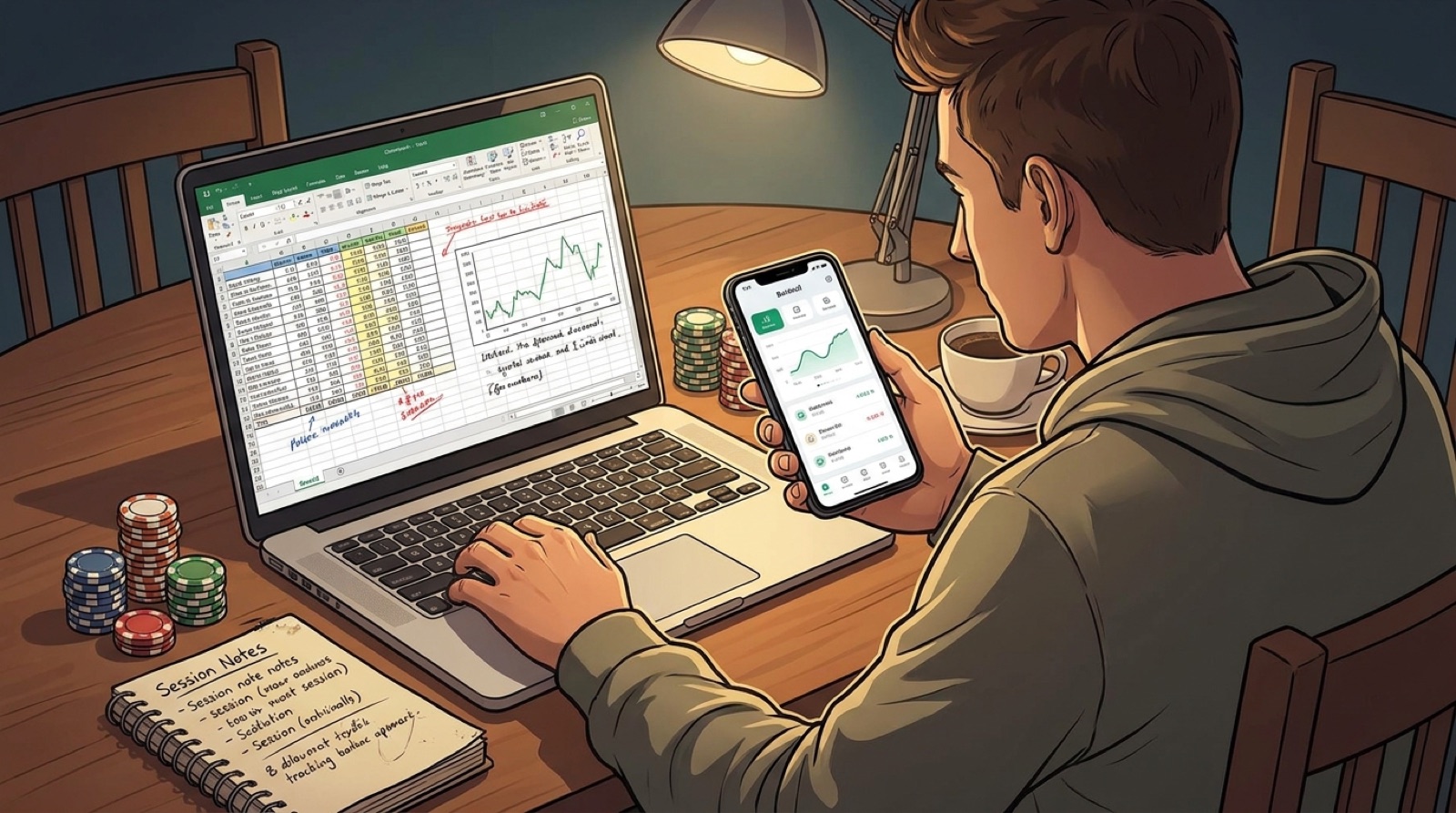
 Poker bankroll app vs spreadsheet: which one keeps you honest?
A poker stop loss app should answer one simple question: are you still playing a good session, or are you trying to win back money with worse decisions?
That is why a stop loss is more than a number. A two-buy-in stop can help, but it is only useful if you also track why the session changed. Were you tired? Was the game still good? Did the big loss come from a cooler, a punt, or a table you should have left an hour earlier?
Poker Stack is built for that kind of review. You log the session, the result, the place, the stakes, and the notes while the details are still fresh. Over time, your stop-loss rule stops being a guess and starts becoming a pattern you can actually inspect.
Track your own results: The Poker bankroll tracker app guide explains what Poker Stack records, when an app beats a spreadsheet, and how to review sessions with less guesswork.
What a poker stop loss app should track
The primary keyword is poker stop loss app, but the real job is not to shame you into quitting. The job is to help you make fewer expensive emotional decisions.
At minimum, track these items for every session:
- Starting bankroll and planned session bankroll.
- Stakes, location, game type, and table quality.
- Buy-ins, rebuys, cashout, and total profit or loss.
- Planned stop loss before the session starts.
- Time played and time of the biggest emotional shift.
- Short notes on tilt, fatigue, game quality, and any major hand that changed your play.
If you already use a spreadsheet, you can still do this. The problem is that most spreadsheets get updated late, or only when the result feels worth recording. That is one reason we wrote about tracking live poker sessions without a spreadsheet. A stop-loss rule works better when the session log is easy enough to use every time.
Set the rule before you sit down
The worst time to invent a stop loss is after losing a stack. Your brain will search for a reason to stay. The table is still good. The weak player is about to reload. The next seat change will fix everything. Sometimes that is true. Often it is just bargaining.
Pick a rule before the session starts. It can be a fixed number of buy-ins, a percentage of your live bankroll, or a time-based rule. A common live-cash version is simple: quit after losing two full buy-ins unless the game is clearly exceptional and you still feel sharp.
That last part matters. A stop loss is not a moral test. It is a risk-control rule. Responsible gambling groups such as the National Council on Problem Gambling, Gamblers Anonymous, and GambleAware all stress the value of limits and honest self-checks. Poker players should take that seriously, even when they see themselves as skill-game players.
Use the stop loss as a review trigger
A good stop loss does not only say quit. It tells you when to review.
After you hit the limit, record the session before you leave the room or start the drive home. In what to record after every session, the main point is that small details disappear fast. That is even more true after a losing session.
Write one or two plain notes:
- Was I still making normal decisions?
- Was the lineup good enough to justify staying?
- Did I leave because of the rule, or because I was already tilted?
- Would I make the same quit-or-stay decision tomorrow?
Those notes are more useful than a heroic story about discipline. They also protect you from false confidence. A player can quit after losing two buy-ins and still be playing badly for the last hour. A player can also lose two buy-ins in a great game and leave too early. Tracking gives you a record to judge the decision later.
When you should quit immediately
Some signals should override the table conditions.

Download Poker Stack Now
"PokerStack is THE app you need to have as a live poker player."
Poker.com


- You are chasing a specific player because you think they owe you money.
- You are opening hands you normally fold because you want action.
- You are thinking about your daily, weekly, or monthly result instead of the current decision.
- You are hiding the real loss from yourself by counting chips loosely.
- You would be embarrassed to write your next hand or reload into your session notes.
That last test is brutal, but useful. If you do not want to record the next decision, you probably should not make it.
Do not copy another player’s number
Stop-loss advice often sounds too neat. Lose one buy-in and leave. Lose three and leave. Play until the game breaks. None of those rules works for every player.
Your rule should fit your bankroll, stakes, game type, emotional control, and the quality of the games you play. A short-stacked tournament player, a deep live cash player, and a weekend home-game regular do not need the same stop-loss rule. General bankroll-management guides, including PokerStrategy's bankroll management guide, are useful starting points, but your own session history should decide the rule you keep.
This is where a poker bankroll app beats a spreadsheet for many players. The app is always with you, which means the quit decision can be recorded when it happens, not reconstructed later with a cleaner memory.
A simple stop-loss system for live players
Use this system for your next ten sessions:
- Before the session, set a stop loss and a maximum session length.
- Write one sentence about the game you are looking for.
- When you lose one buy-in, rate your mental state from 1 to 5.
- When you hit the stop loss, quit unless you can clearly explain why staying is still a good decision.
- After the session, log the result and one note about the quit-or-stay moment.
- After ten sessions, review the pattern.
The review is the point. Maybe you learn that your two-buy-in rule is too tight for deep-stacked Friday games. Maybe you learn that your third buy-in is almost always bad money. Either way, the answer comes from your record, not your mood.
Where Poker Stack fits
Poker Stack helps you turn stop-loss discipline into a repeatable habit. Log the session, add the bankroll movement, write the note, and look back at the pattern across real sessions.
Use it before your next live session. Set the stop-loss number first, then record whether you followed it. If you break the rule, do not hide it. That is the session you most need to track.
You can keep reading practical bankroll and tracking guides on the Poker Stack blog, or start by logging your next session in the app.
Related Poker Stack reading
Poker bankroll app vs spreadsheet: which one keeps you honest? How to track live poker sessions without a spreadsheet
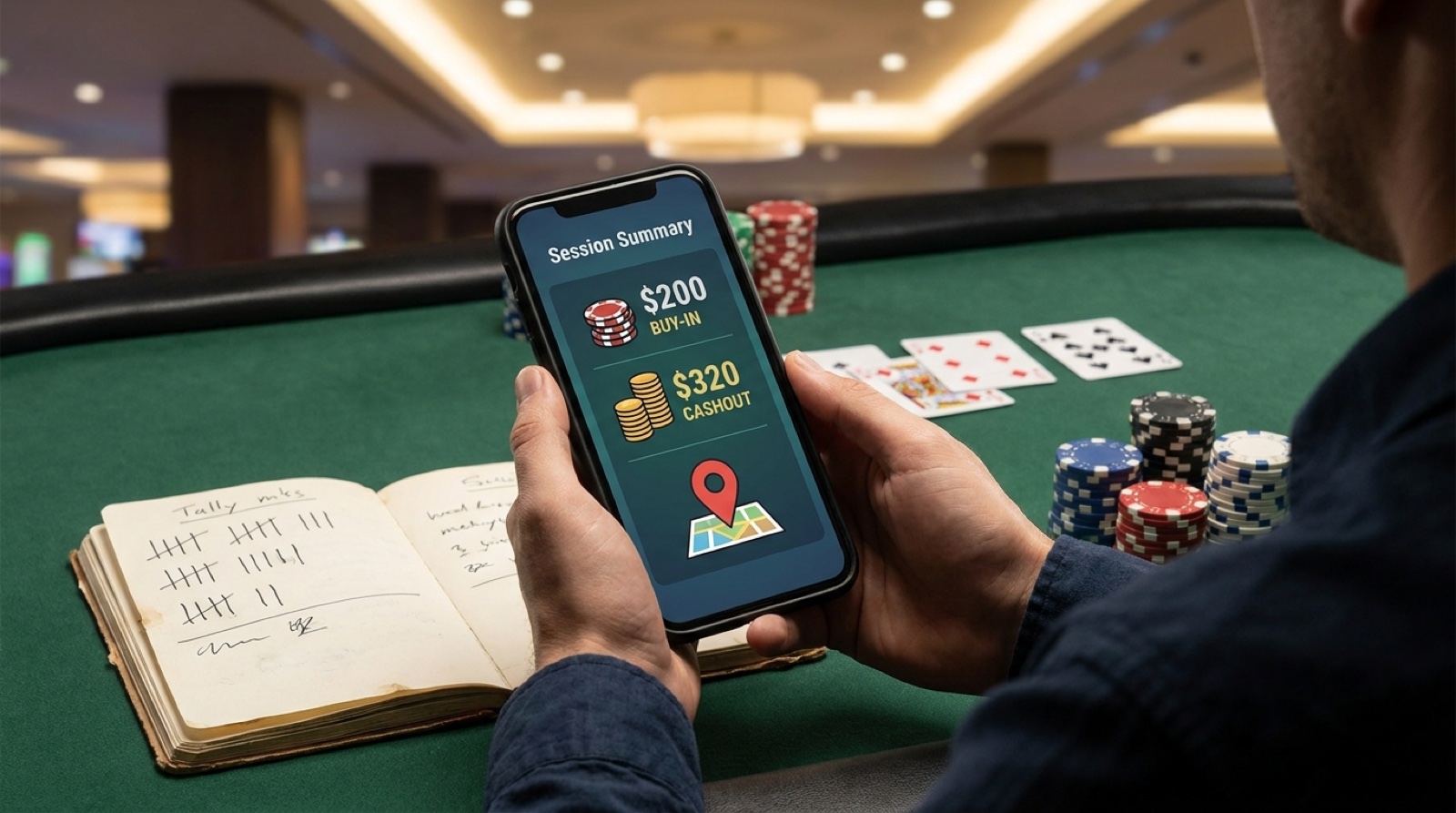 Poker bankroll tracker app: what to record after every session
Read our blog