 The bloodbath variance of PLO6: a survival guide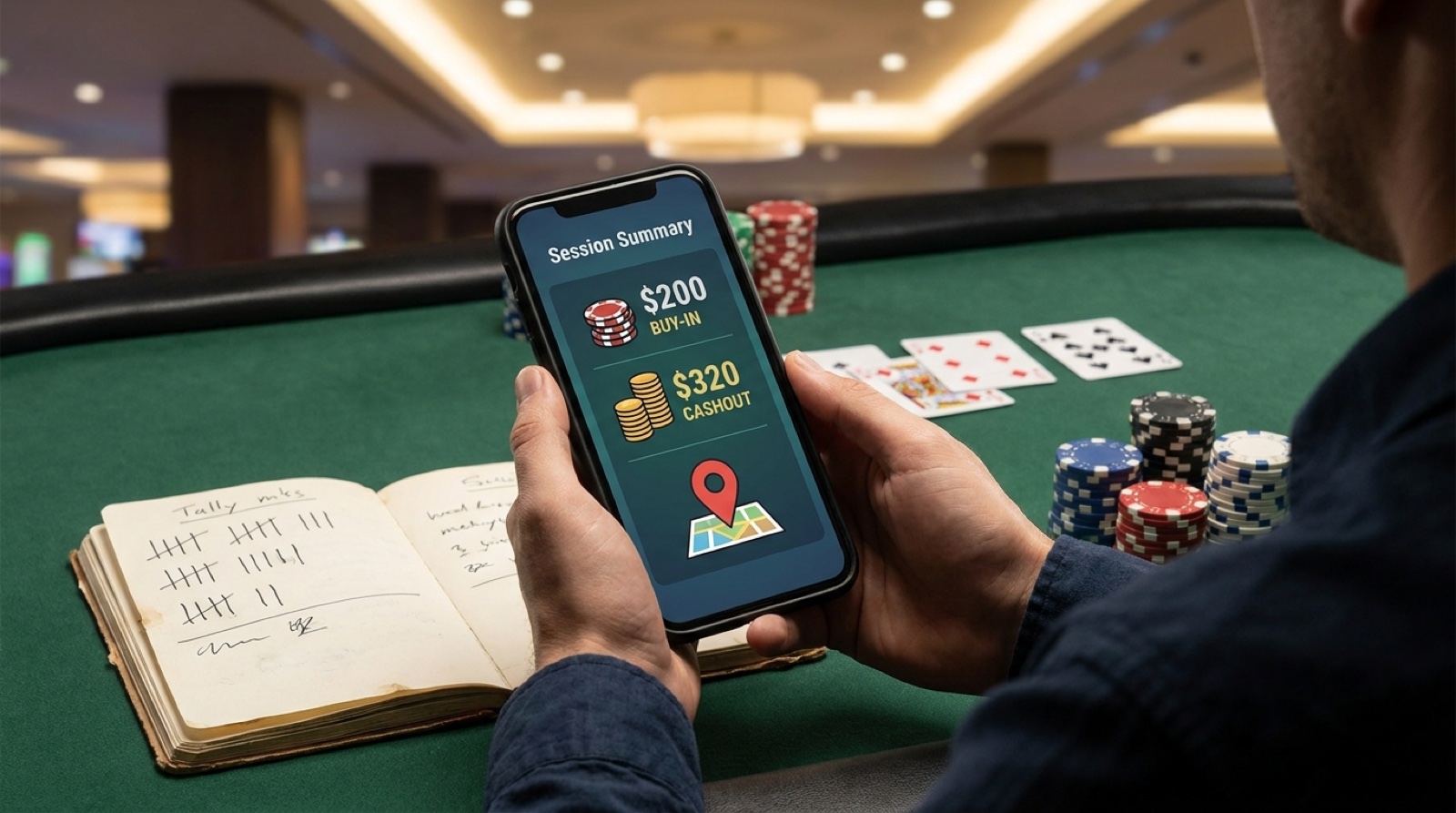
A poker bankroll tracker app is only useful if you record the right things after every session. Buy-in and cashout matter, but they are not enough. You also need the game, stakes, location, session length, and a short note about how you played.
If you only track wins and losses, you get a scoreboard. If you track the session properly, you get a record you can actually use. Poker Stack is built around that simple habit: finish the session, enter the key details, and stop guessing about your poker results.
Track your own results: The Poker bankroll tracker app guide explains what Poker Stack records, when an app beats a spreadsheet, and how to review sessions with less guesswork.
Start with the numbers that cannot be argued with
Record the basics before you leave the room or close the laptop. Memory gets worse once you are tired, hungry, or annoyed about the last hand.
- Buy-in amount
- Cashout amount
- Profit or loss
- Stakes and game type
- Start time and end time
- Location or site
- Tips, fees, and travel costs when they matter
These numbers answer the first question every serious player has: am I actually winning? They also protect you from selective memory. A player may remember the big Friday win and forget three small weekday losses. A tracker does not care which session felt better.
Bankroll advice from training sites such as Upswing Poker and PokerNews says the same thing in different ways: your bankroll is a business number, not a mood. You need clean records before you can make good decisions.
Add game details so the result has context
A $400 win means something different in $1/$2 no-limit hold'em than it does in a deep $5/$10 PLO game. Record the format and stakes every time.
At minimum, save the game type, blinds, cap or buy-in rules, and whether the session was cash, tournament, home game, or private game. If the room uses special formats, mark them. Bomb pots, straddles, short deck, and PLO variants can change your swings fast.
This is where a poker session tracker becomes more than a ledger. You can review which games are making money and which ones only feel fun. If you are experimenting with formats such as 5-card PLO or bomb pots, separate tags keep the results honest.
Track time because hourly rate beats vibes
Profit alone can flatter you. Hourly rate is harder to fake.
A $300 win over two hours is a different session from a $300 win over ten hours. The first might be a strong game. The second might be a long grind with a lucky finish. Record start time and end time, then look at hourly profit by game, location, and stake.
Casino poker rooms and tournament series often publish structures, schedules, and fees online. Before you compare results across rooms, check the actual cost of playing. Public sources such as the WSOP tournament schedule and room pages can help you separate poker profit from rake, fees, and travel expense.
Write one short note about the session
Do not write a diary. Write one useful note.
Good notes are plain and specific. “Called too light after losing a big pot.” “Great table, two players calling every river.” “Left when the lineup got worse.” “Played tired after midnight.” These notes are easy to review later because they describe something you can act on.

Download Poker Stack Now
"PokerStack is THE app you need to have as a live poker player."
Poker.com


Bad notes are just venting. “Unlucky again.” “Dealer killed me.” “This room is cursed.” That may feel good for ten seconds, but it will not improve your game.
For strategy work, you can use training resources such as PokerStrategy.com or hand-review tools. For bankroll work, keep the note inside your tracker next to the result. The money and the behavior belong together.
Record emotional state without making it weird
You do not need therapy language in your bankroll app. You need a quick signal for whether your head was clear.
Use a simple tag or note: focused, tired, tilted, distracted, confident, rushed. After 30 or 50 sessions, patterns start to show. Maybe your late-night sessions are bad. Maybe your private-game wins hide huge emotional swings. Maybe you play fine at $2/$5 but force action at $5/$10.
This matters because bankroll management is also behavior management. GambleAware and other responsible gambling resources warn players to pay attention to control, chasing losses, and time spent gambling. A poker player who tracks state of mind is less likely to turn one bad session into a bad month.
What to review every week
Once a week, open your tracker and look for decisions, not drama.
- Which game type made the most money?
- Which stake had the worst hourly rate?
- Which room or home game had the best lineup?
- Did you quit well, or did losing sessions run too long?
- Are travel, tips, and fees eating more than you thought?
This is where Poker Stack can change your habits. You are not just storing old results. You are using them to decide where to play, what stakes to take, and when to leave. That matters even more in swingy games such as PLO6, where a few big sessions can hide the real risk.
A simple after-session checklist
Use this checklist before you leave the parking lot, hotel room, or train ride home.
- Enter buy-in and cashout.
- Add game type, stake, and location.
- Save session length.
- Add fees, tips, and travel costs if they affect the result.
- Write one note about the table or your play.
- Tag emotional state if it changed your decisions.
If you can do that in under a minute, you will have a better record than most players in the room. That is the point of a live poker bankroll app. It should make discipline easy enough that you keep doing it.
Related Poker Stack reading
The bloodbath variance of PLO6: a survival guide How to introduce bomb pots to your home game
Read our blog