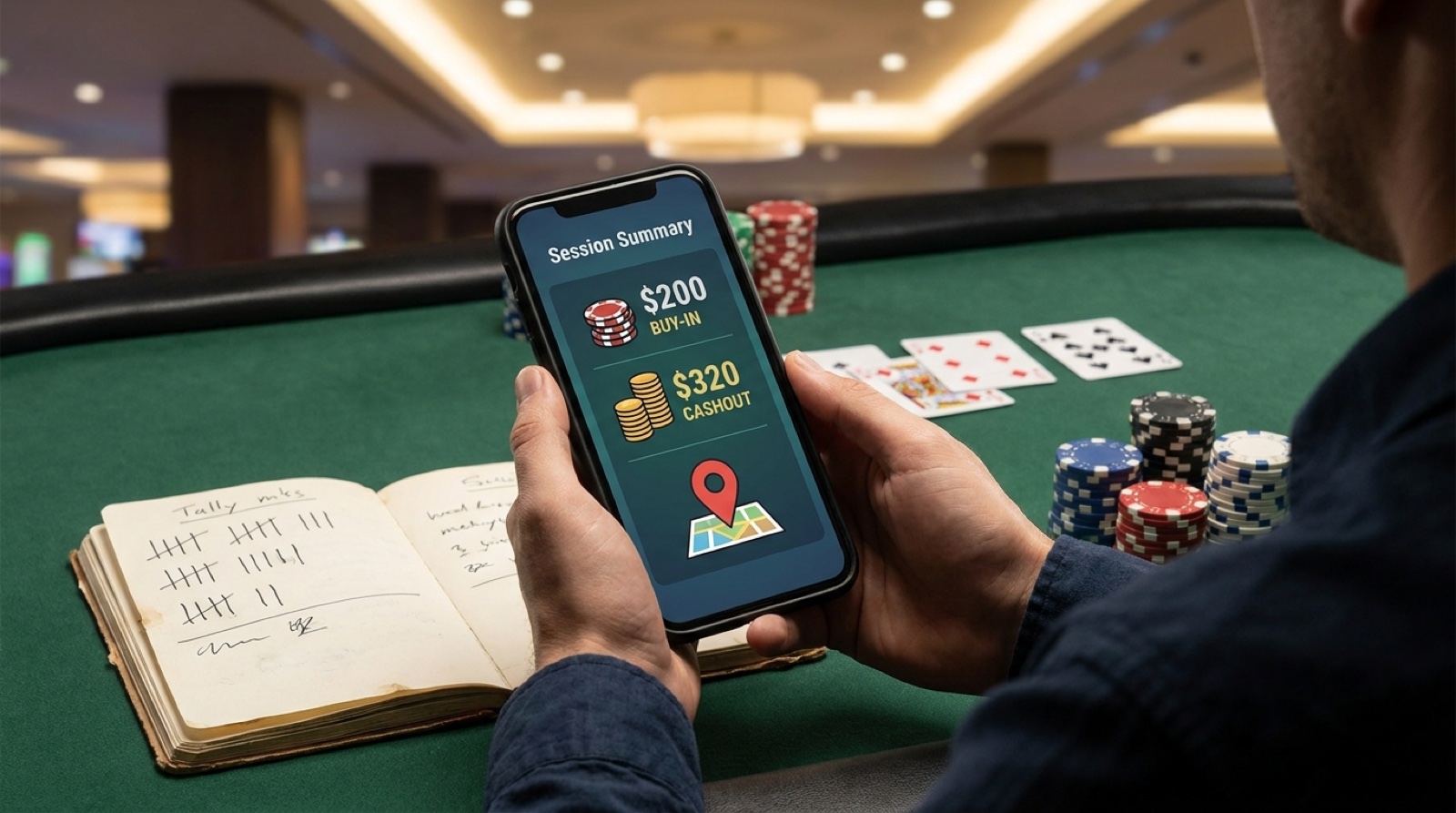
 Poker bankroll tracker app: what to record after every session
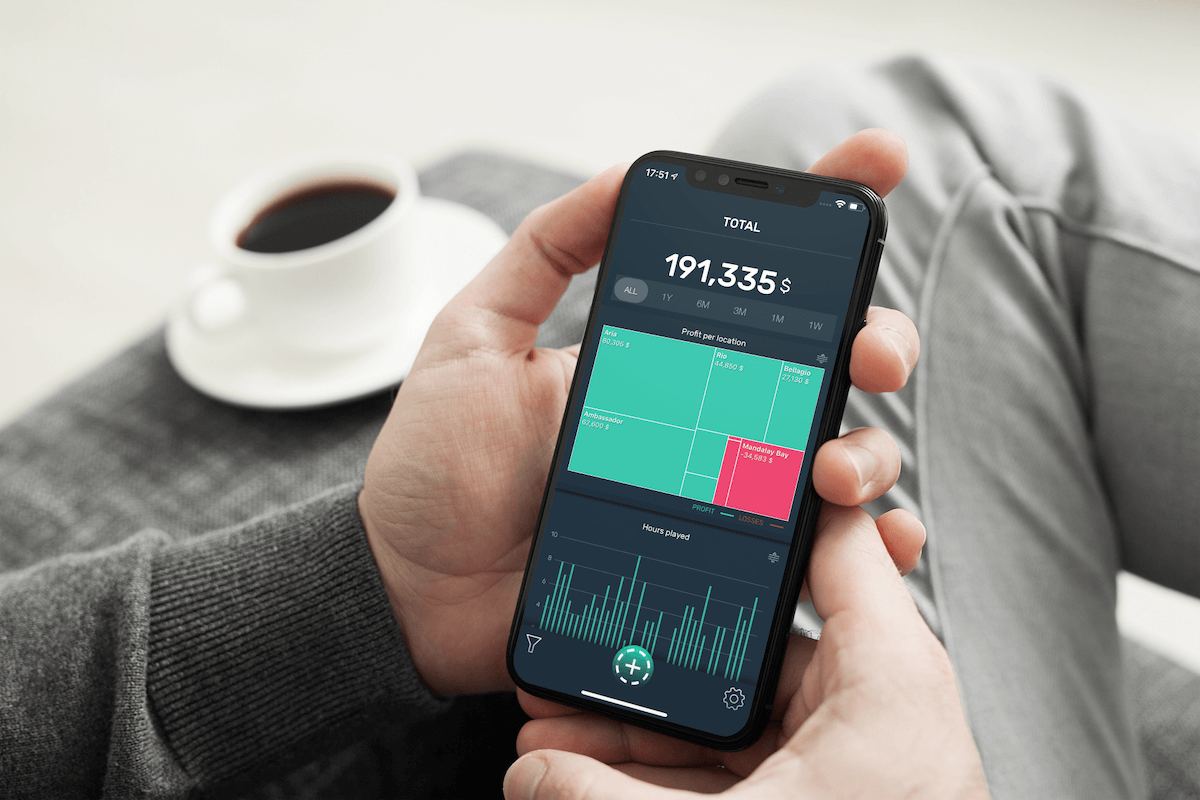
Poker bankroll management is the system that keeps you in the right games long enough for skill to matter. Your bankroll is poker-only money. It is separate from rent, bills, savings, and emergency cash. The rule is simple: choose stakes by buy-ins, track every session, and move down before a downswing forces you to.
For cash games, many players use 20-40 buy-ins for live poker and a deeper cushion online. For tournaments, 100 or more average buy-ins is a better starting point because variance is harsher. If you are still learning, playing big-field events, or taking shots, use the conservative end of every range.
Poker bankroll management chart
The right bankroll depends on game type, edge, risk tolerance, and how easily you can reload. These rules are not guarantees. They are practical guardrails that help you avoid going broke during normal poker swings.
| Game type | Practical bankroll | Conservative bankroll | Use when |
|---|---|---|---|
| Live no-limit cash | 20-40 buy-ins | 40-60 buy-ins | You have a solid edge and can move down quickly |
| Online no-limit cash | 50 buy-ins | 100 buy-ins | The game is tougher, faster, and more hand volume creates bigger swings |
| Single-table SNGs | 50-75 buy-ins | 100 buy-ins | You play regular-speed formats with predictable fields |
| Multi-table tournaments | 100 buy-ins | 200+ buy-ins | You play large fields, turbos, satellites, or mixed buy-ins |
| Shot-taking | 1-3 buy-ins above your normal game | Only with a written stop-loss | You are winning at your current stake and can drop back without ego |
Upswing Poker separates bankroll needs by format and notes that tournaments need more protection because variance is higher. PokerNews also frames bankroll management around controlling the amount you risk so normal variance does not wipe you out.
Cash game bankroll rules
Cash game bankroll management starts with the buy-in. If your normal live $1/$2 game uses a $300 max buy-in, a 20-buy-in bankroll is $6,000. A 40-buy-in bankroll is $12,000. If that number feels too high, play smaller, buy in shorter only if the game allows it, or treat the session as entertainment money rather than a poker bankroll.
| Cash stake | Typical full buy-in | 20 buy-ins | 40 buy-ins | Move-down trigger |
|---|---|---|---|---|
| $0.05/$0.10 online | $10 | $200 | $400 | Below $200 |
| $0.25/$0.50 online | $50 | $1,000 | $2,000 | Below $1,000 |
| $1/$2 live | $300 | $6,000 | $12,000 | Below $6,000 |
| $2/$5 live | $500 | $10,000 | $20,000 | Below $10,000 |
Live poker can sometimes use fewer buy-ins than online poker because the games are slower and often softer. Online poker creates more hands per hour, more tables, and more small edges, so the same player can see a bigger downswing faster. If you are not tracking results yet, start with the conservative side.
Tournament bankroll management
Tournament bankroll management has to be stricter than cash game bankroll management. You can play well for weeks and still brick many events. One final table can hide bad habits, and one long downswing can make a good player feel broken.
| Average buy-in | 100 buy-ins | 200 buy-ins | Best fit |
|---|---|---|---|
| $5 | $500 | $1,000 | Small online MTT schedule |
| $20 | $2,000 | $4,000 | Regular online MTTs or small live dailies |
| $100 | $10,000 | $20,000 | Live tournament schedule with meaningful travel costs |
| $500 | $50,000 | $100,000 | Serious live tournament schedule |
For MTTs, think in average buy-in, not the biggest event you want to play. A player with a $2,000 bankroll is not rolled for a regular $100 tournament schedule. They might take one small shot with a clear stop-loss, but their normal schedule should be much smaller.
If you want to see how ugly tournament variance can get, the Primedope tournament variance calculator lets you simulate MTT downswings. For cash games, its cash game variance calculator shows how win rate and standard deviation change risk of ruin.
Online poker bankroll management
Online poker bankroll management needs extra discipline because the game is fast. You can play thousands of hands, register too many tournaments, or jump stakes in one bad evening. The same bankroll that survives one live session may not survive a bad week online.
- Keep a separate online poker bankroll for each site or track all sites in one app.
- Use a deeper cushion for online cash games than live cash games.
- Cap your number of tables when moving up.
- Do not mix casino games, sports betting, or blackjack into your poker bankroll.
- Review sessions after play, not while tilted and still registering new games.
If you use tracking tools, separate bankroll tracking from hand-history analysis. Our guide to poker tracking software explains the difference between session apps, HUDs, and online hand databases.
Live poker bankroll management
Live poker bankroll management has details online players often ignore. Travel, food, tips, parking, hotel costs, exchange rates, and private-game expenses can turn a winning session into a losing trip. If you play live, track the poker result and the session context.
| Track this | Why it matters |
|---|---|
| Buy-in, rebuys, and cash-out | This is the core profit or loss number |
| Stakes and game type | $1/$2 cash, $2/$5 cash, PLO, and tournaments need separate records |
| Hours played | Profit without hours does not show your hourly rate |
| Location and table notes | Good game selection matters as much as discipline |
| Expenses | Travel and tips can change the true result of a live session |

Download Poker Stack Now
"PokerStack is THE app you need to have as a live poker player."
Poker.com



This is where Poker Stack is useful. You can record the session before memory gets fuzzy, then compare stakes, venues, formats, and hourly rate later. The guide to tracking live poker sessions without a spreadsheet shows a simple setup.
When to move up or move down
A bankroll plan only works if it tells you what to do after wins and losses. Write the rules before you play. Do not negotiate them at the table.
- Move up only when you have the bankroll, the win rate, and the emotional control for the next stake.
- Move down when your bankroll falls below the minimum for your current game.
- Take shots with a fixed number of buy-ins, then drop back if they fail.
- Use a stop-loss for sessions where tilt is likely to override good decisions.
- Review your results monthly, not after one big win or one painful loss.
A simple shot-taking rule works well: take two buy-ins at the higher stake, then return to your normal game if you lose them. If you win, keep playing only while you still have the bankroll to survive a normal downswing.
If quitting sessions is your leak, use a stop-loss instead of willpower. The poker stop-loss app guide explains how to set a quitting point before emotions take over.
How to build a poker bankroll
Building a poker bankroll is slower than most players want it to be. The goal is not to spin $100 into a dream stake in a weekend. The goal is to play games you can beat, avoid ruin, and let small edges compound.
- Start with money you can afford to lose.
- Pick one main format instead of jumping between every game.
- Use a bankroll chart for your main stake.
- Track every session, even the small ones.
- Move down quickly when the bankroll says you should.
- Withdraw only after you know how much bankroll your normal game needs.
Freerolls, bonuses, and promotions can help, but they are not a bankroll plan by themselves. If you are starting from zero, read the guide to building a free poker bankroll. If you already play regularly, focus less on promotions and more on clean records.
Bankroll examples
Here are practical examples for common bankroll sizes. Adjust them if your local games are unusually tough, rake-heavy, or expensive to play.
| Bankroll | Better fit | Avoid |
|---|---|---|
| $500 | Micro online cash, low buy-in SNGs, freerolls, very small MTTs | Regular $1/$2 live cash or $50 live tournaments |
| $1,000 | Online micro stakes, $5-$10 MTT average buy-in, careful small live shots | Making $1/$2 live your normal game |
| $5,000 | Small online cash, small-to-mid online MTTs, selective live $1/$2 | Regular $2/$5 live cash or $200-$500 MTTs |
| $10,000+ | More stable live $1/$2, some $2/$5 shots, deeper online schedules | Ignoring stop-losses because the bankroll feels big |
Poker.org notes that bankroll recommendations vary widely because different players, games, and risk levels need different buy-in cushions. SplitSuit makes the same practical point: a buy-in rule is a starting point, not a law.
Common bankroll mistakes
- Counting rent money or savings as part of the poker bankroll.
- Moving up after one heater without enough buy-ins.
- Playing tournaments with a cash-game bankroll rule.
- Reloading automatically instead of recording the real session loss.
- Mixing casino games or sports bets into poker results.
- Ignoring expenses when calculating live poker profit.
- Refusing to move down because it feels embarrassing.
If poker losses are affecting bills, relationships, sleep, or mental health, stop playing and talk to a support organization such as the National Council on Problem Gambling. Bankroll management is a poker tool, not a way to make unsafe gambling safe.
FAQ
What is poker bankroll management?
Poker bankroll management is the practice of keeping poker money separate and choosing stakes your bankroll can survive. It uses buy-in rules, session tracking, stop-losses, and move-down triggers to protect you from normal variance.
How many buy-ins do I need for poker?
For live cash games, 20-40 buy-ins is a common practical range. Online cash players often use 50-100 buy-ins. Tournament players usually need 100 or more average buy-ins because MTT variance is much higher.
What bankroll do I need for $1/$2 live poker?
If the full buy-in is $300, a 20-buy-in bankroll is $6,000 and a 40-buy-in bankroll is $12,000. Recreational players can use a smaller entertainment budget, but they should not treat it as a protected poker bankroll.
Is tournament bankroll management different from cash games?
Yes. Tournaments need more buy-ins because payouts are top-heavy and long losing stretches are normal. A cash player may be comfortable with 20-40 live buy-ins, while an MTT player may want 100-200 average buy-ins.
How do I build a poker bankroll?
Start with money you can afford to lose, choose games below your bankroll limit, track every session, and move down quickly after losses. Building a bankroll is mostly patience, game selection, and discipline.
What should I track for live poker bankroll management?
Track buy-in, rebuys, cash-out, stakes, game type, location, hours, expenses, and short notes. Those records show whether you are really winning and which games are worth playing again.
Related Poker Stack reading
Poker bankroll tracker app: what to record after every session
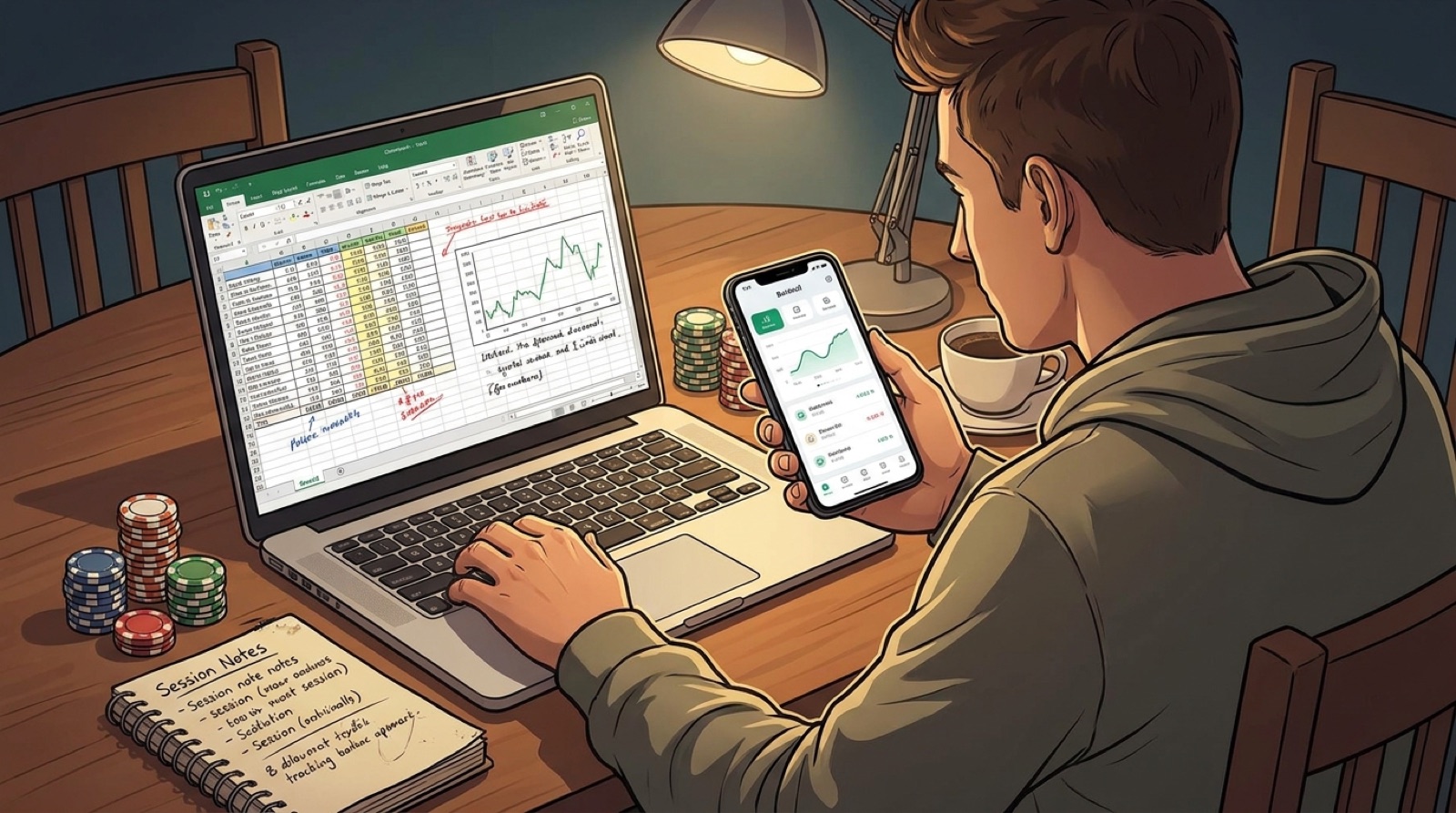 Poker bankroll app vs spreadsheet: which one keeps you honest?
Read our blog