 How to track live poker sessions without a spreadsheet
A poker session notes app is useful only if the note gets written while the session is still fresh. Three days later, most players remember the river card, the bad beat, and the final number. They forget the table quality, the small mistakes, and the reason they stayed too long.
Good notes are not long. They are not a diary. They are a short record of what happened, why the result makes sense, and what you should do differently next time.
If you already use Poker Stack, treat the note as the human context beside the numbers. Buy-in and cashout tell you the score. The note tells you whether the score came from a good game, a bad decision, or plain poker noise.
Track your own results: The Poker bankroll tracker app guide explains how Poker Stack turns session records into a bankroll habit, not a pile of loose memories.
Start with the facts you cannot argue with
Before writing opinions, save the facts. These fields keep the note clean:
- Date and venue
- Game type, such as NLHE, PLO, tournament, or mixed game
- Stakes and buy-in cap
- Total buy-ins and cashout
- Start time and end time
- Seat changes, table changes, and major lineup shifts
- Fees, tips, parking, food, or travel costs if they affect the session
This is where an app beats memory. A spreadsheet can work if you enjoy maintaining one. Excel tables and Google Sheets functions can handle poker records, but they add friction at the exact moment most live players want to be done.
A fast session log is easier to keep. I covered the basic routine in how to track live poker sessions without a spreadsheet. The note is the next layer.
Write one table-quality note
Most players review the hand they lost. Fewer review whether the game was worth playing in the first place.
Make table quality a required note. Keep it simple:
- Great game, two loose callers, deep stacks.
- Average table, one strong player on my left.
- Bad game after 10 p.m., should have changed tables.
- Private game looked good, but the cost and pressure were too high.
This one line matters because table selection hides inside your bankroll graph. You may think you are running badly when you are really sitting in the wrong game too often. That is why cash game session review should start with the game, not your ego.
Save one or two hands, not the whole session
Do not try to recreate every hand. You will quit the habit after a week.
Pick the hand that changed the session, then write the useful pieces:
- Position
- Stack depth
- Preflop action
- Board runout
- Decision point
- What you were thinking at the time
A good note sounds like this: $2/$5, 160bb deep, called turn too wide after losing previous pot. River call was more frustration than range.
A bad note sounds like this: Unlucky again.
There is a place for full hand-history software. Online tools such as PokerTracker 4 focus on hand histories, reports, filters, graphs, and HUD stats. A live poker session note has a different job. It should capture the few decisions you can review later without pretending you have a full database.
Track tilt and fatigue in plain language
You do not need dramatic mental-game notes. You need one honest signal.
- Focused
- Tired
- Tilted after big pot
- Distracted
- Playing too long
- Good quit

Download Poker Stack Now
"PokerStack is THE app you need to have as a live poker player."
Poker.com


Use tags if that is easier. After 30 sessions, the pattern becomes harder to ignore. Maybe your late sessions are bad. Maybe the private game is profitable but leaves you tilted. Maybe you play fine at $1/$3 and rush decisions at $2/$5.
This is also where bankroll notes and behavior meet. A stop-loss record is stronger when it includes the state you were in when you ignored it.
Separate app notes from study notes
Not every poker note belongs in the same place.
| Note type | Where it belongs | Example |
|---|---|---|
| Session fact | Bankroll tracker | $1/$3 NLHE, bought in $600, cashed out $980. |
| Table read | Session note | Game got worse when seat 4 left. |
| Hand review | Study file or hand tool | Turn barrel with blocker, review sizing. |
| Life cost | Expense or trip note | Parking, hotel, flight, rideshare, food. |
Competitor pages show why this split matters. Poker Bankroll Tracker presents session tracking as the core job. Poker Analytics points heavily at bankroll management, stats, filters, and hand review. PokerNews lists several tracker tools and ties bankroll records to finding leaks. The lesson is simple: the tool matters less than whether you record the same useful details every time.
Use this poker session notes app checklist
After your next session, write this before you leave the room:
- What game did I play?
- Was the table good, average, or bad?
- What was my total buy-in and cashout?
- How long did I play?
- What was the biggest decision spot?
- Did tilt, fatigue, or ego change a decision?
- Did I quit at the right time?
- What is one adjustment for the next session?
Keep the answer short. The goal is not to write perfect prose. The goal is to make your next review honest.
What a useful note looks like
Here is a full note that is long enough to help but short enough to repeat:
$2/$5 NLHE, Friday night, 5 hours. Bought in $1,000, cashed out $1,420. Good game for first three hours, then two loose players left. Missed a table-change spot. Biggest hand: river call with top pair after the lineup got tougher. Felt tired after midnight. Next time, leave or change tables when the game turns average.
That note gives you more than a win. It gives you a table-selection lesson, a fatigue signal, and a next-session rule. If you write that kind of note inside your poker bankroll tracker, your review gets cleaner fast.
After a few weeks, compare notes against results. Look for repeated words: tired, stuck, great game, bad table, rushed, good quit. Those words often explain more than the final cashout number.
Related Poker Stack reading
How to track live poker sessions without a spreadsheet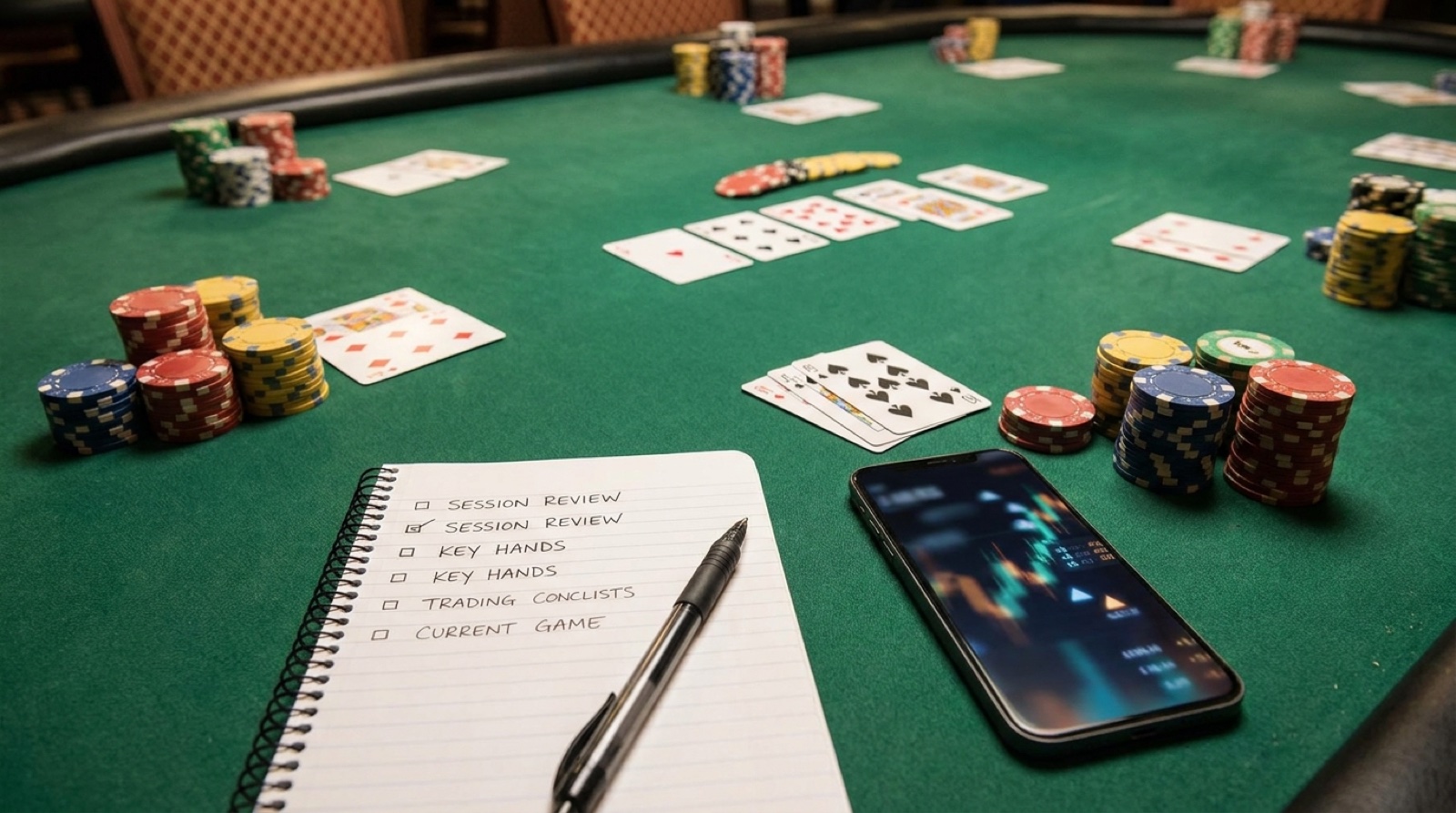 Cash game session review checklist for live poker players
Read our blog
Read our blog