 Poker variance tracker: are you running bad or playing bad?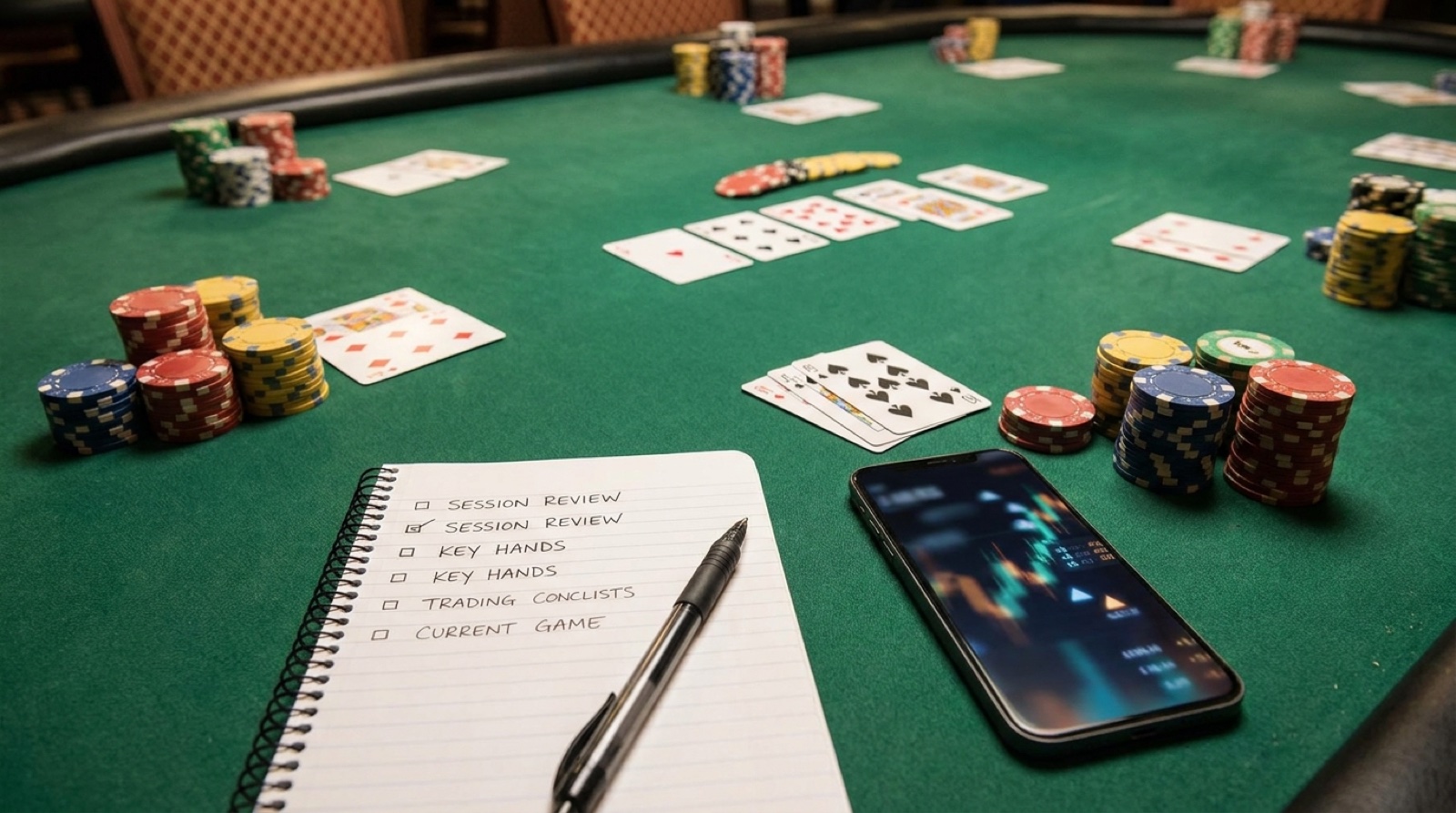
A poker session review is not a confession booth. It is a short check of what happened, what mattered, and what you should change before the next live cash game.
The worst review is the one most players do automatically: open the cashier number, feel good or bad for ten seconds, then move on. Profit matters, but it is a poor summary of one session. You can win while playing badly. You can lose while making good decisions in a bad lineup.
Use this checklist after every live cash session, especially if you are trying to build a real record in a poker bankroll tracker instead of relying on memory.
Track your own results: The Poker bankroll tracker app guide explains what Poker Stack records, when an app beats a spreadsheet, and how to review sessions with less guesswork.
1. Was this game worth playing?
Start with the game, not your ego. A session can be well played and still be a poor use of your time if the table was bad from the start.
- How many clear recreational players were at the table?
- Were the strongest players on your left or right?
- Was the game deep enough for your edge?
- Did the straddles or bomb pots make the game better or just bigger?
- Were you staying because the game was good, or because you were already stuck?
Be honest here. Table selection is not a soft skill. It is part of the win rate. PokerNews gives similar weight to game selection in its bankroll-management advice because the wrong games put pressure on even a disciplined bankroll: PokerNews bankroll management 101.
2. What were the three biggest pots?
Do not review every hand. Review the pots that moved the session. For each one, write the street, stack depth, position, and the decision that mattered most.
- Was the preflop decision standard for the table?
- Did the flop bet have a clear purpose?
- Did you call because the price was right, or because folding felt weak?
- Did a river bluff target the right player?
- Was the hand actually close, or are you just annoyed by the result?
If you want a cleaner post-session record, pair this with a fast session log. I covered the basic fields in how to track live poker sessions without a spreadsheet.
3. Did tilt change any decisions?
Tilt is not always loud. Sometimes it looks like defending one more blind, taking one thin spot too far, or staying in a bad game because you want the stack back.
Review these signs after the session:
- You played a hand mainly because you were card dead.
- You avoided a good bluff because you had just lost a pot.
- You called a river because you wanted proof.
- You changed stakes or bought in deeper without a clear reason.
- You stopped noticing the table because you were tracking your result.
The mental-game side of poker is not separate from tracking. Jared Tendler's work on tilt is useful because it treats tilt as a pattern you can spot and train, not as a personality flaw: The Mental Game of Poker.
4. Did you miss a table change?
This is one of the most expensive leaks in live poker. A table starts good, two players leave, a tough regular sits down, and nobody wants to admit the game changed.
Ask yourself:
- When did the table stop being good?
- Was there a better game in the room?
- Did you ask for a table change early enough?
- Were you protecting your seat, or protecting your hourly rate?
If you often notice the bad table only after the session, make this a required note in Poker Stack. Put one line in the session notes: table quality at start, table quality at finish. That record becomes useful after 20 sessions.
5. Did the session fit your bankroll plan?
A cash game review should always end with bankroll context. The question is not only whether you won. The question is whether the session made sense for the bankroll you brought to the game.

Download Poker Stack Now
"PokerStack is THE app you need to have as a live poker player."
Poker.com


- Was the stake within your normal bankroll plan?
- Was the buy-in size planned before you sat down?
- Did you reload because the spot was good, or because you hated being down?
- Did you respect your stop loss?
- Would you make the same bankroll decision before the session started?
If stop-loss discipline is one of your leaks, read poker stop loss app: when to quit a session. If you are trying to separate bad play from normal swings, read poker variance tracker: are you running bad or playing bad?.
6. What is the next adjustment?
End with one action. Not ten. One.
Examples:
- Leave faster when the table loses two weak players.
- Stop calling rivers against passive players without a clear bluff story.
- Write down every reload reason before taking out more chips.
- Take a 10-minute walk after losing a 200bb pot.
- Review three-bet pots from the cutoff and button this week.
This keeps the review useful. A vague note like "play better" will not change anything. A specific adjustment can.
A simple session review template
Copy this into your notes if you want a fast version:
- Game quality: good, average, or bad, plus why.
- Biggest decision: the hand and street that mattered most.
- Tilt check: one spot where emotion affected the decision, if any.
- Table change: did you stay too long, move well, or miss a better game?
- Bankroll fit: stake, buy-in, reloads, stop loss, and whether the plan held.
- Next adjustment: one thing to do differently next session.
For a broader study routine, Upswing Poker's strategy library is a good place to compare specific spots after you have written the hand down: Upswing Poker strategy articles. For live-specific training and review habits, Red Chip Poker also has practical material for cash-game players: Red Chip Poker strategy.
Track the review before memory edits the session
The best time to log a live session is before the story changes in your head. Poker Stack lets you record the result, location, stake, notes, and bankroll movement while the details are still fresh.
If you already use Poker Stack, add the review template above to your next session note. If you do not, download Poker Stack from the App Store and track the next session properly.
Related Poker Stack reading
Poker variance tracker: are you running bad or playing bad? Poker stop loss app: when to quit a session
 How to track live poker sessions without a spreadsheet
Read our blog