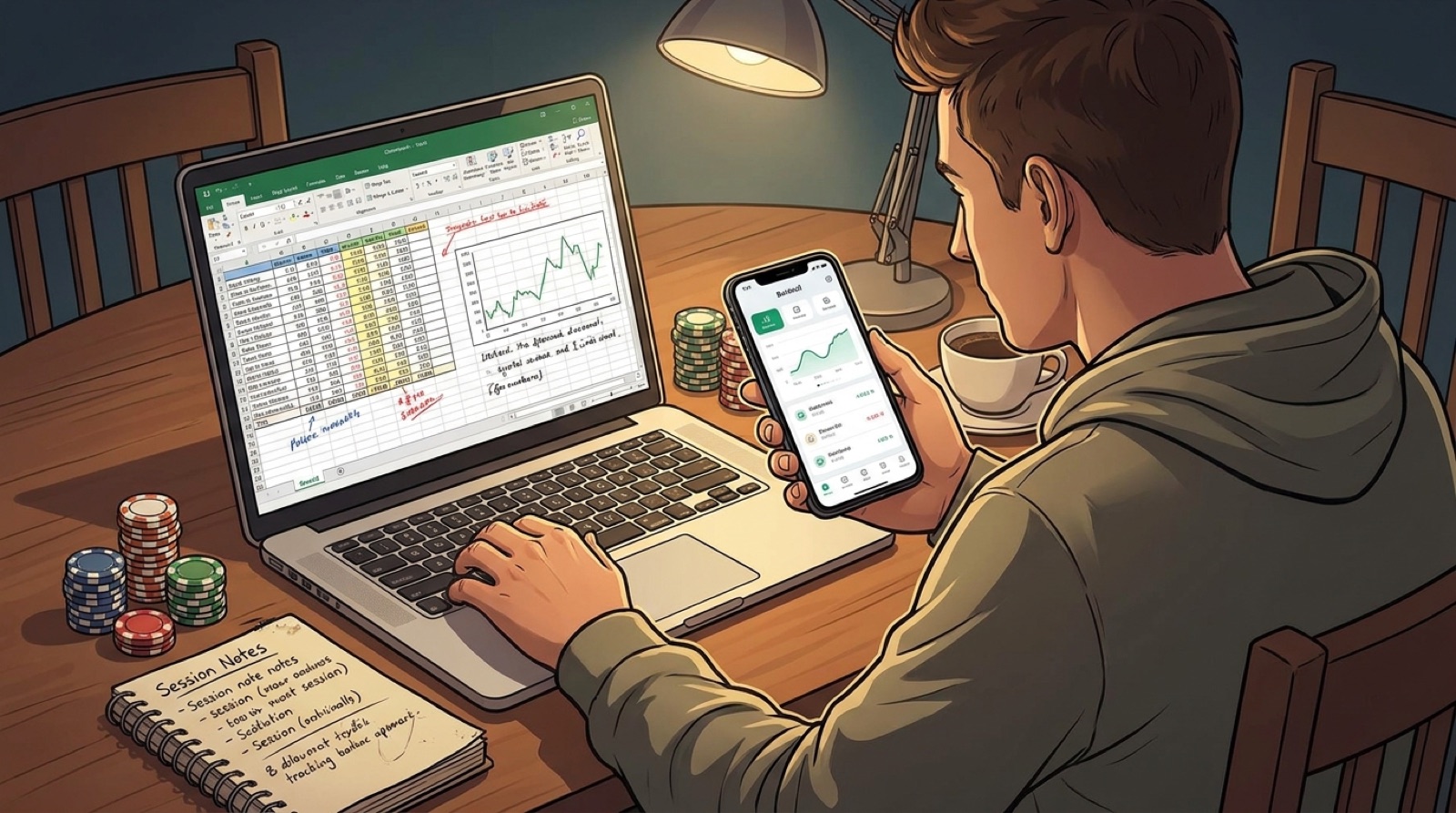
 Poker bankroll app vs spreadsheet: which one keeps you honest?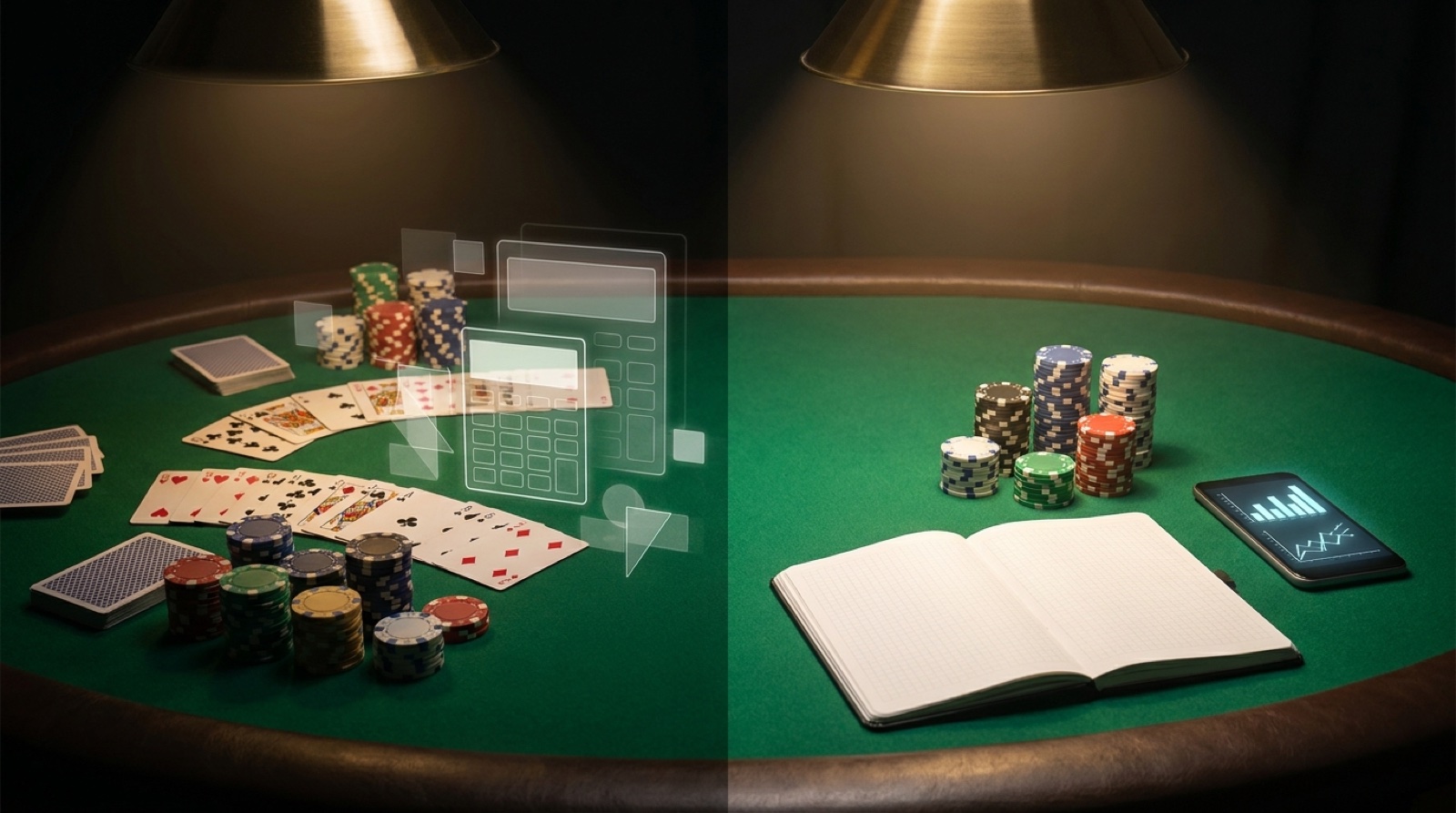
A poker odds calculator app answers one kind of question: what are my chances in this hand? A poker bankroll tracker answers a different one: is my poker life actually moving in the right direction?
Both can be useful. The mistake is expecting one app to solve the other app's job. Odds calculators help you study hands and learn equity. Bankroll trackers help you record sessions, spot leaks, measure games, and protect your roll from bad memory.
Track your own results: The Poker bankroll tracker app guide explains what Poker Stack records, when an app beats a spreadsheet, and how to review sessions with less guesswork.
What a poker odds calculator app is good at
A poker odds calculator is a hand tool. You enter cards, ranges, or a board, then it estimates equity or winning chances. The best use is away from the table, when you can slow down and review a spot without pressure.
These apps and tools are useful when you want to:
- Check all-in equity after a hand.
- Learn how draws change from flop to turn.
- Compare hands against broad ranges.
- Understand pot odds and price before you guess.
- Study common spots until the math feels less foreign.
If you are reviewing a flush draw, a pair plus draw, or a tournament shove, a calculator can make the lesson sharper. Tools like the PokerNews odds calculator, PokerCruncher, and other equity tools exist because poker players do need math practice.
For basic pot odds, the core question is simple: how much do you have to call, and how often do you need to win for that call to make money? Upswing Poker has a clear pot odds walkthrough if you want a refresher before using any calculator.
What a poker odds calculator app does not track
A calculator does not know whether you are playing tired. It does not know whether the 2/5 game at one room is beating you while the 1/3 game at another room is paying your bills. It does not know that your worst sessions happen after the second re-entry or after midnight.
Most players do not lose because they never calculated a flush draw. They lose because they remember the big hands and forget the boring evidence. They forget travel cost, missed stop losses, table quality, tilt buy-ins, and the difference between one hot weekend and a real win rate.
That is where tracking matters. A poker tracking habit turns scattered sessions into a record you can actually review.
What a bankroll tracker is good at
A bankroll tracker is a results tool. It should help you record what happened, then make better decisions next time. That includes the obvious numbers, but the notes around those numbers matter too.
At minimum, track:
- Game type, stakes, location, and date.
- Buy-ins, rebuys, cash-out, and net result.
- Session length and hourly rate.
- Notes on table quality, mental state, and key mistakes.
- Travel or tournament costs when they affect the real result.
This is the job Poker Stack is built for. You log the session while the details are still fresh, then review patterns across games instead of relying on the story your brain prefers.
That matters because poker memory is biased. A player can remember the cooler from Friday and forget the three soft spots they left early. They can remember one great tournament score and miss that re-entries are eating the monthly budget. A tracker keeps the boring truth in front of you.
Which app should you open first?
Use the odds calculator when the decision is about a hand. Use the bankroll tracker when the decision is about your poker business.
| Question | Best tool | Reason |
|---|---|---|
| How often does my draw get there? | Odds calculator | It estimates equity for a specific hand or range. |
| Is this room actually profitable for me? | Bankroll tracker | It compares real sessions by location, stake, and result. |
| Am I rolled for the next stake? | Bankroll tracker | It shows your bankroll, swings, and shot-taking history. |
| Did I make a good all-in call? | Odds calculator | It helps you review equity after the hand. |
| Are re-entries hurting my ROI? | Bankroll tracker | It records the full cost, not only the final cash. |

Download Poker Stack Now
"PokerStack is THE app you need to have as a live poker player."
Poker.com


If you are new to both, start with tracking. You can study a hand later. You cannot rebuild an accurate session record two weeks later from memory.
Why many players need both
The clean setup is not calculator or tracker. It is calculator for study, tracker for results. One helps you understand spots. The other tells you whether your choices are adding up across real sessions.
Think about a live cash player who keeps losing in a deep 5/10 game. An odds calculator can show whether a specific turn call was priced correctly. A tracker can show that the player wins at 2/5, loses after long sessions, and has a bad habit of adding one last buy-in when the table gets wild.
That second lesson is usually more expensive to ignore.
For tournament players, the same split applies. Equity tools can help with shoves, calls, and range work. A tracker tells you whether buy-ins, re-entries, travel, and field selection make sense as a full package. If you want to compare the wider market, PokerNews keeps a bankroll tracker roundup, while the Poker Stack calculator app guide and the best poker apps guide cover more of the app stack.
A simple workflow after each session
You do not need a complicated system. The best workflow is the one you will use while tired in a parking lot or on the train home.
- Log the session in your bankroll tracker before you leave or as soon as you get home.
- Add one short note about table quality and one short note about your biggest mistake.
- Mark any hand that needs study.
- Use an odds calculator later for that hand, not during the emotional part of the session.
- Review your tracker once a week for game selection, stop-loss patterns, and bankroll health.
That workflow keeps each tool in its lane. The calculator helps your study. The tracker protects your decisions when ego and memory start editing the story.
Where Poker Stack fits
Poker Stack is not trying to replace an equity calculator. It solves the part most players skip: logging sessions, seeing bankroll movement, and reviewing results without a messy spreadsheet.
If you already use calculator tools, keep them. Then add a tracking habit so you know whether the study is turning into better results. If you are choosing only one app today, choose the one that records your next session. That data starts paying you back the moment you build enough history to see a pattern.
You can install Poker Stack on iOS and track the next session while the details are still fresh.
Related Poker Stack reading
Poker bankroll app vs spreadsheet: which one keeps you honest? How to track live poker sessions without a spreadsheet
Read our blog