 Poker bankroll app vs spreadsheet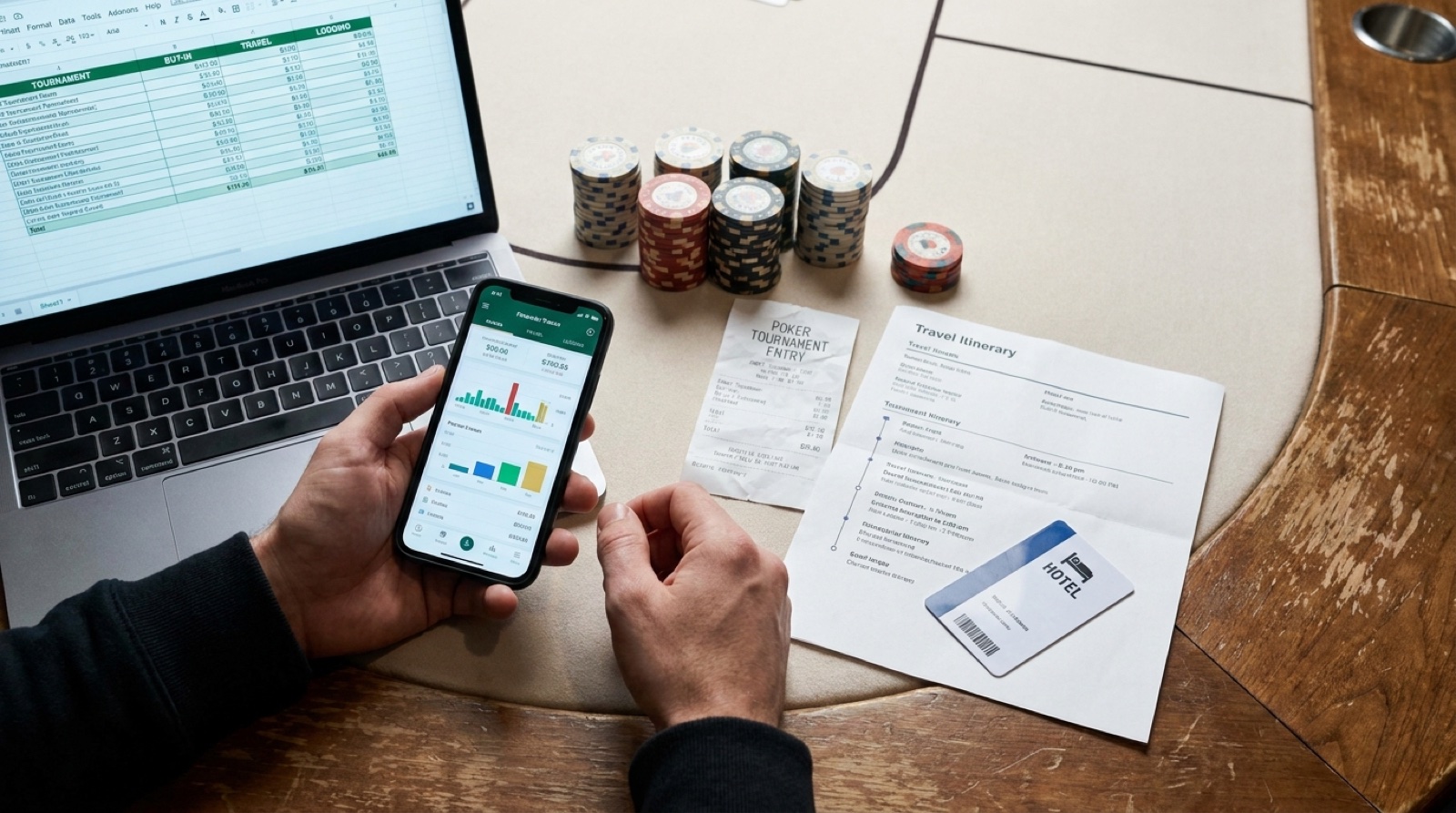
A tournament bankroll tracker should show the full cost of playing, not only the buy-in printed on the schedule. For tournament players, the real number includes buy-ins, re-entries, travel, lodging, food, swaps, markups, and the time spent chasing a score.
If you only track cashes, you are measuring the best part of the story and ignoring the expensive parts. That makes your ROI look cleaner than it is.
Track your own results: The Poker bankroll tracker app guide explains what Poker Stack records, when an app beats a spreadsheet, and how to review sessions with less guesswork.
Why tournament results get misread
Cash games are simple to record. You sit down with one amount, leave with another amount, and log the session. Tournaments are messier. A single event can include a first bullet, a re-entry, a satellite, a swap with another player, a hotel night, rideshare costs, tips, and food away from home.
That is why a tournament player can feel profitable while the bankroll quietly moves the other way. A min-cash might cover the buy-in and still lose money after travel. A good series might look great until you count the missed bullets, markup sold, and expenses around the trip.
Poker Stack is useful here because the habit matters more than the math. Record the cost while it is fresh. Review the pattern later. The player who tracks every tournament has a better read on what games are actually worth playing.
Track the full tournament cost
Start with a simple rule: every tournament entry gets a full cost line. The line should include the base buy-in, fee, re-entry count, add-ons if the format has them, and any satellite cost used to win the seat.
Then add the real-world costs that make tournament poker different from a normal online session:
- Travel to and from the venue.
- Hotel or short-term rental costs.
- Food costs above what you would normally spend at home.
- Parking, rideshare, tips, currency conversion, and resort fees.
- Swaps, staking, backing, and sold action.
Do not mix all of this into a vague trip number. A trip total is useful, but each event still needs its own record. Otherwise you cannot tell whether the main event, side events, satellites, or travel decision caused the problem.
A simple example
| Item | Cost |
|---|---|
| Main buy-in | $600 |
| One re-entry | $600 |
| Hotel share | $220 |
| Travel | $180 |
| Food above normal spend | $90 |
| Total real cost | $1,690 |
If you cash for $1,450, the tournament lobby may feel close to breakeven. Your bankroll says something else. You lost $240 before counting swaps or sold action. If you sold 30 percent of yourself, the personal result changes again.
This is why tournament ROI needs clean records. ROI is normally calculated as profit divided by cost. If the cost is wrong, the ROI is wrong. Sites such as The Hendon Mob can show public cashes, but public cashes do not show your expenses, swaps, or how many bullets you fired.
Re-entries need their own line
Re-entries are where tournament bankrolls get blurry. A player may remember playing a $400 event, then forget it became an $800 or $1,200 event after a bad level and a second bullet.
Track each bullet separately. You do not need to write an essay. Just log the event, bullet number, cost, starting stack if useful, and a short note about why the re-entry happened. Was the lineup good? Were you tilted? Was the structure still deep enough? Did you rebuy because the field was soft or because you did not want to leave?
That note is where the value lives. After 20 or 30 events, you can see whether re-entries are part of a good plan or just a bankroll leak.
Travel turns small edges into big costs
A weekend tournament trip can be a good idea, but travel changes the break-even point. The farther you travel, the more you need to win before the trip makes sense.
Before you book the flight or hotel, write down the expected total cost. Include the events you plan to play, the maximum number of re-entries you allow, and a hard trip stop-loss. Then compare that number with your bankroll. If the whole trip would make you play scared, the event is probably too big for your current roll.

Download Poker Stack Now
"PokerStack is THE app you need to have as a live poker player."
Poker.com


The WSOP tournament schedule, PokerNews live tournament coverage, and official venue pages can help you check structures and schedules before you travel. Use them for planning, then use your own tracker for the money that actually leaves your pocket.
What to record after every tournament
Keep the log short enough that you will actually use it. A good tournament record has these fields:
- Event name, venue, date, format, and stake.
- Total buy-ins, fees, re-entries, add-ons, and satellites.
- Travel, hotel, food, and other trip costs.
- Amount cashed, if any.
- Percentage owned after swaps, backing, or sold action.
- One short note about table quality, mistakes, or the next adjustment.
If you already use spreadsheets, read Poker bankroll app vs spreadsheet. If you play live events often, pair that with the cash game session review checklist habit: log the session while the details are still fresh. A spreadsheet can work, but it often fails at the exact moment you need it most: right after the session, on your phone, while the details are still clear.
Use a bankroll rule before the series starts
The best time to set limits is before registration opens. Decide the maximum number of events, the maximum bullets per event, and the trip stop-loss. Then write it down.
Some players use strict buy-in rules. Others use a softer series budget. The exact rule depends on your edge, game size, bankroll, and life situation. What matters is that the rule exists before variance starts talking.
General bankroll advice from training sites such as Upswing Poker and tournament reporting from Poker.org can give you context, but your own records decide whether a format is working for you.
How Poker Stack helps
Poker Stack gives you a place to record sessions, costs, results, and notes without turning every tournament into a spreadsheet project. Use it before you register, after you bust, and when you review the trip later.
For tournament players, the goal is not perfect accounting. The goal is to stop guessing. If you know your total cost, your real cashes, and your ownership percentage, you can make better decisions about the next series.
Install Poker Stack before your next tournament trip and log the full cost, not just the buy-in.
Related Poker Stack reading
Poker bankroll app vs spreadsheet Poker variance tracker: are you running bad or playing bad?
 Poker stop loss app: when to quit a session
Read our blog