 Best poker study apps after you install a bankroll tracker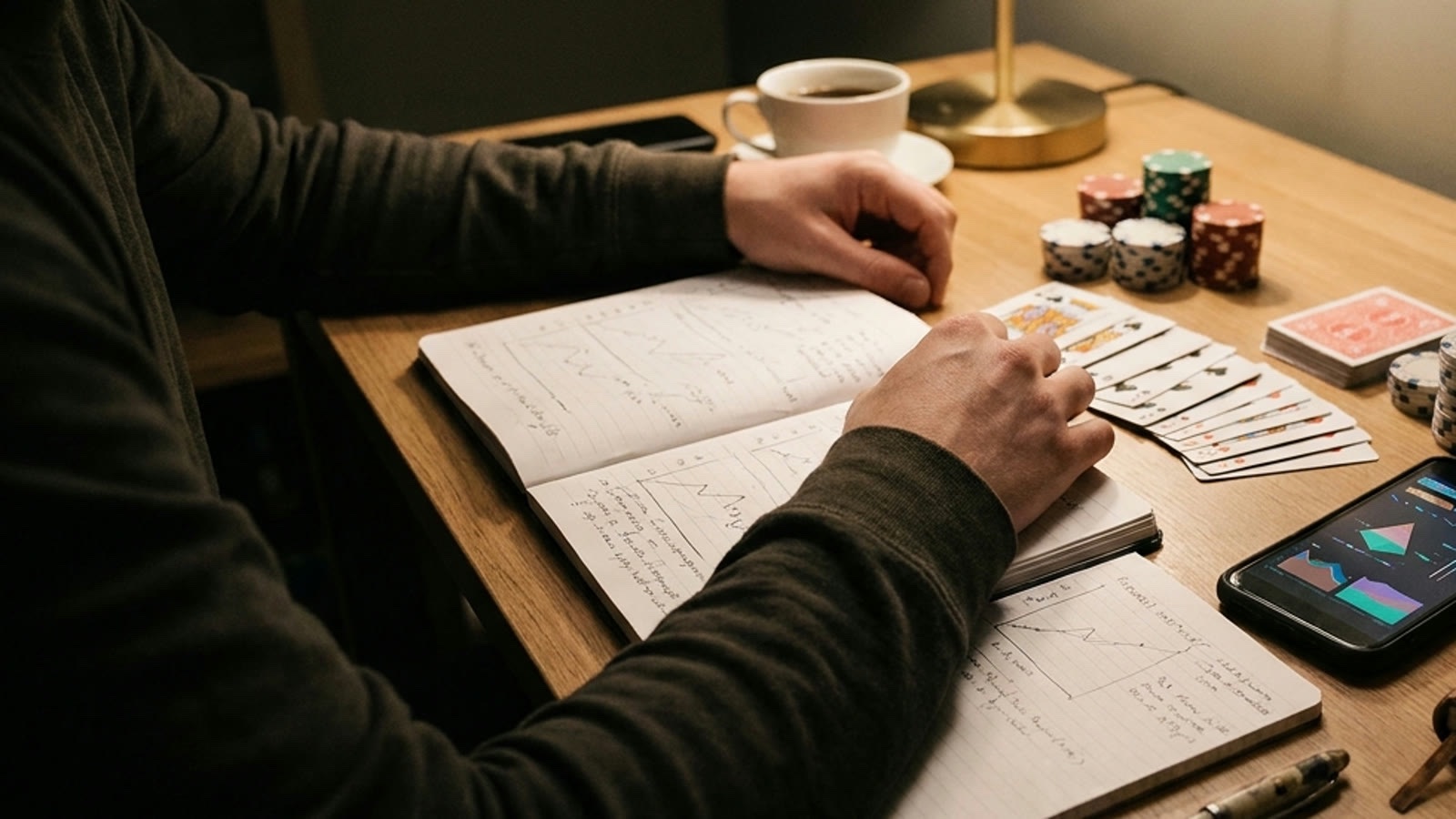
You can study poker without solvers and still get better every week. The trick is to stop pretending study means staring at perfect outputs for spots you barely understand.
If you play live poker, low-stakes online, home games, or weekend tournaments, your biggest edge often comes from cleaning up repeated mistakes. Missed value bets. Loose calls when tired. Bad table selection. Tilt after losing two pots. Those leaks show up in your own session notes before they show up in a solver tree.
This routine is built for normal players. It takes about two focused hours per week, plus a few minutes after each session. You do not need a solver subscription. You need tracked sessions, a few marked hands, and enough honesty to admit which spots keep costing you money.
Start with the hands you actually played
Do not start the week with random training videos. Start with your own database, notebook, or Poker Stack session notes. The hands you played are already sorted by importance because they cost you time, money, or mental energy.
After each session, mark three kinds of hands:
- A big pot where you were unsure on the turn or river.
- A medium pot that felt boring but keeps happening.
- A non-hand note, such as tilt, fatigue, table selection, or a missed table change.
If you only save the huge coolers, your study will become a bad-beat diary. Save the ordinary spots too. Calling one bet too wide on the river can be more useful to review than losing set over set.
For the tracking side, Poker Stack's guide to what to record after every session gives you a simple base. Record the game, stakes, buy-in, cashout, room, and one useful note before the details fade.
Use a simple weekly study schedule
Here is the routine I would use if I wanted to study poker without turning it into a second job.
| Day | Task | Output |
|---|---|---|
| After each session | Log the result and mark two or three hands | A short list of real spots to review |
| Monday | Group hands by leak | One main theme for the week |
| Wednesday | Review one theme with notes or training material | A plain rule for the next session |
| Friday | Write a five-minute pre-session reminder | One action you can use at the table |
| Sunday | Check whether the leak appeared again | A keep, change, or drop decision |
This is close to deliberate practice: work on a specific weakness, get feedback, and repeat. The broad idea is well known outside poker too. The deliberate practice concept is useful here because it pushes you away from passive watching and toward targeted reps.
Pick one leak, not ten
The fastest way to quit studying is to make the list too big. One week is not enough time to fix c-betting, 3-bet pots, blind defense, thin value, ICM, river bluff catching, and tilt.
Pick one leak from your marked hands:
- You call river bets too often when obvious draws miss.
- You stop value betting when the board gets a little scary.
- You chase every table because you do not want to wait.
- You play too long after your focus is gone.
- You review tournament bust-outs but ignore re-entry decisions.
Then write the leak in normal language. If your note says "river node under-defended multiway," you may understand it later, or you may not. If it says "I keep paying off tight players when they overbet river," you can use it next Friday night.
For a practical review template, use the cash game session review checklist. It keeps the focus on what happened, what you controlled, and what you will change next time.
Study the pattern before the theory
Solvers are useful, but they answer precise questions. Many players skip the hard part, which is asking a precise question in the first place.
Before looking up strategy, write the spot like this:
- Game and stakes
- Positions
- Stack depth
- Preflop action
- Board texture
- Opponent type
- Your decision point
- The question you want answered
Good question: "At 1/3 live, should I value bet top pair good kicker on a blank river against a loose caller who checked twice?" Bad question: "Did I play this hand right?"
If you need a general strategy reference, start broad. The PokerNews strategy section, Poker.org strategy guides, and 888poker strategy archive are useful for reviewing common concepts before you worry about perfect mixed frequencies.

Download Poker Stack Now
"PokerStack is THE app you need to have as a live poker player."
Poker.com


Build a tiny playbook for repeat spots
Your study notes should become a table-ready playbook. Keep it short enough to read before a session.
For each leak, write four lines:
- The spot: "Loose-passive player calls flop and turn, then raises river."
- The old mistake: "I level myself into calling because my hand looks under-repped."
- The new rule: "Against this player type, respect the river raise unless I have a clear blocker or read."
- The check: "Did I follow this rule next session?"
That is enough. You are not writing a book. You are giving your future self a cleaner decision while chips are in the pot.
If your leak is more about tools and study material, read best poker study apps after you install a bankroll tracker. Study apps can help, but they work better after you know which weakness you are trying to fix.
Use Poker Stack as the feedback loop
Study gets real when it changes your next session. That is where Poker Stack fits.
Use Poker Stack to track the session result, then add one short note about the leak of the week. After a few sessions, you can check whether the same mistake is still showing up and whether it is tied to a room, stake, time of day, or game type.
A simple tracking loop looks like this:
- Before the session, read the one leak you are working on.
- During the session, mark hands that match it.
- After the session, log the result in Poker Stack.
- Add one note about whether the leak appeared.
- At the end of the week, decide whether to keep studying it or move on.
If the leak keeps appearing after three sessions, it is not a knowledge problem anymore. It is a habit problem. Make the next version even smaller.
Keep the routine honest
There are two ways this routine can go wrong.
The first is pretending every losing session means bad play. Sometimes you ran into the top of range. Sometimes the game was good and the result was ugly. Your notes should separate decision quality from the cashier result.
The second is pretending every winning session means the leak is fixed. If you called too wide, got shown a bluff, and booked a win, the habit still needs work.
Use your live poker session tracking records to keep those two stories separate. Results matter, but results without notes are easy to misread.
A weekly routine you can actually keep
If you want the shortest version, use this:
- Track every session.
- Mark two hands and one non-hand leak.
- Pick one theme for the week.
- Review one strategy source for that theme.
- Write one table-ready rule.
- Check the next three sessions for the same leak.
That is enough to study poker without solvers in a serious way. You can add tools later. First, make your own sessions easier to learn from.
For broader study ideas, the Red Chip Poker blog has a long library of practical poker strategy posts. Use resources like that as inputs. Your tracked sessions should still decide what you study next.
Related Poker Stack reading
Best poker study apps after you install a bankroll tracker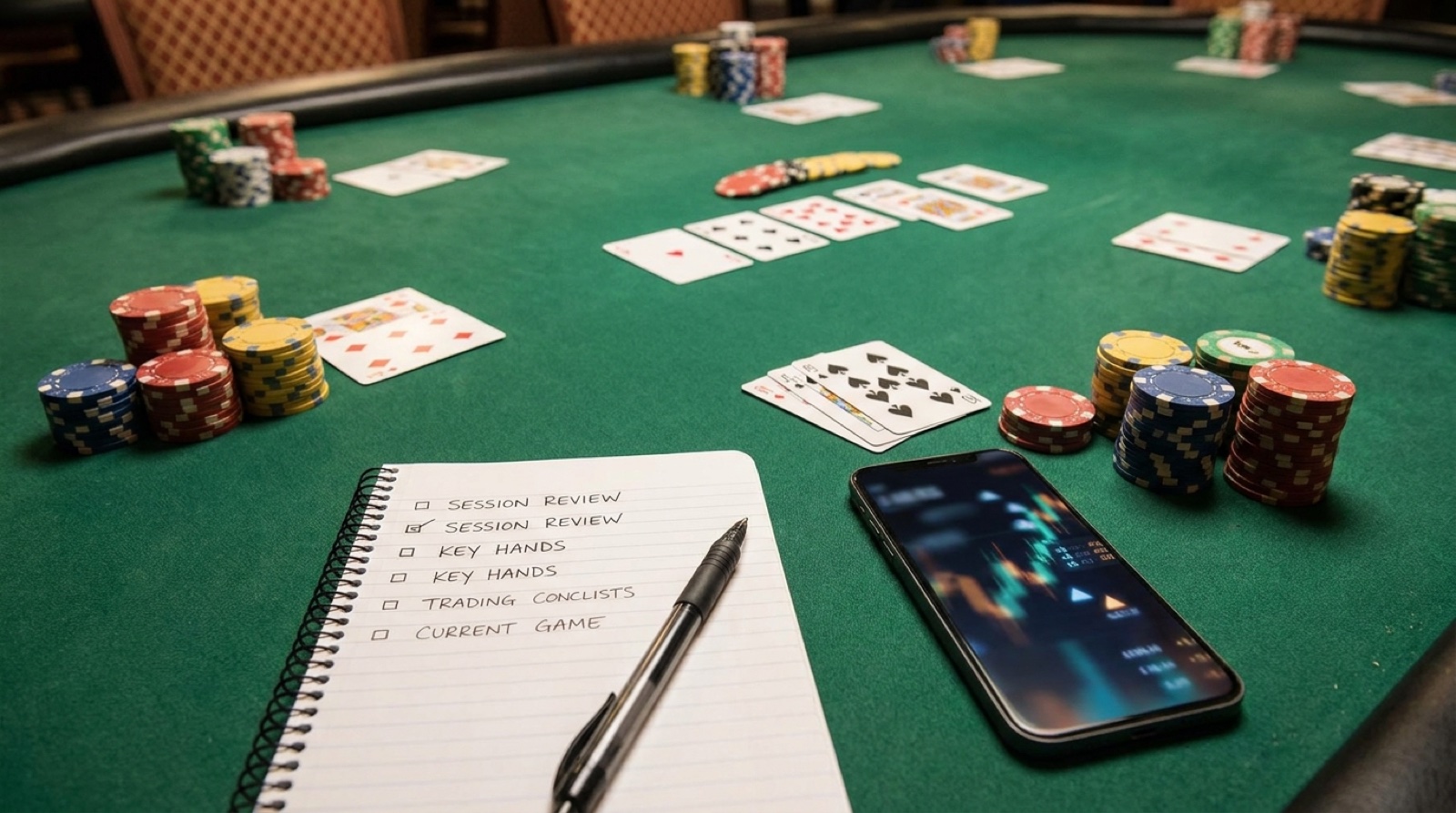 Cash game session review checklist for live poker players
 How to track live poker sessions without a spreadsheet
 Poker bankroll tracker app: what to record after every session
Read our blog