 Poker tracker app checklist: what to compare before you download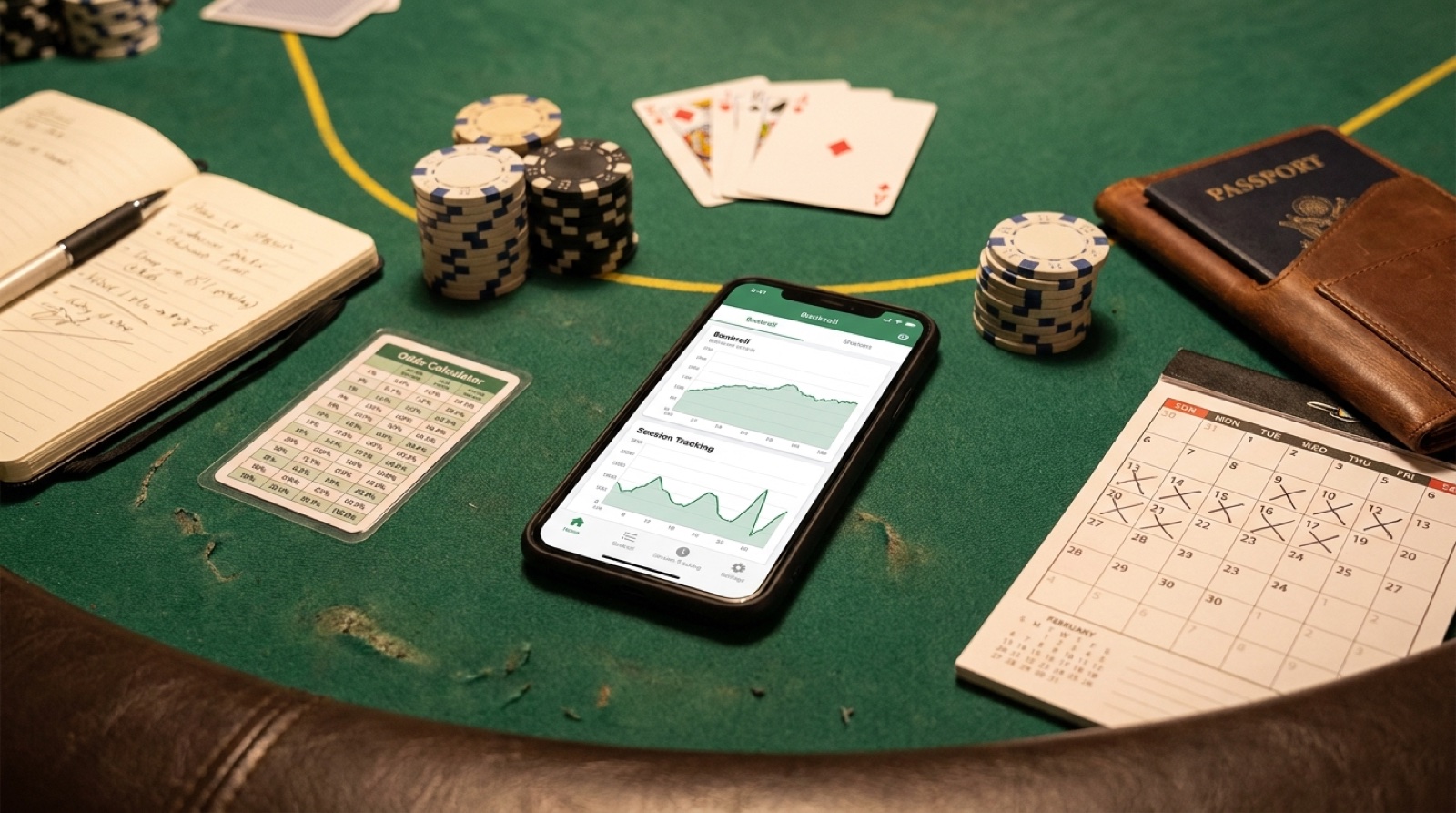
A poker tool stack should help a live player make cleaner decisions before the session, record the truth after the session, and study the right spots away from the table. It should not turn your phone into a distraction while cards are in the air.
The best setup is boring on purpose: a bankroll and session tracker, one odds or equity calculator for off-table work, a note system, a calendar or travel planner, and a couple of study tools you actually use. If an app does not change a decision or preserve a record, it probably does not belong on your first screen.
Track the part calculators miss: Poker Stack is built for bankroll and session records: buy-in, cash out, stakes, location, hours, notes, and review. Use calculators to study hands, then use a tracker to see what your poker life is actually doing.
Start with the job, not the app
Most players build their poker folder backwards. They download whatever looks sharp, then try to justify it. Start with the job instead.
| Job | Tool category | Use it when |
|---|---|---|
| Know whether poker is making money | Bankroll and session tracker | Before and after every session |
| Check odds, equity, and ranges | Calculator or equity tool | During study, not during live hands |
| Remember table texture and leaks | Notes or hand journal | Right after key hands or after the session |
| Control trips and volume | Calendar, map, and travel tools | Before booking or choosing a room |
| Review and improve | Trainer, solver, video, or book app | Away from the table |
That is the whole frame. A poker app is useful when it handles one of those jobs better than memory. The more serious you get, the more your phone should look like a cockpit, not an arcade.
The first slot belongs to a bankroll tracker
A bankroll tracker is the tool that keeps the rest honest. It records the part of poker that players are most tempted to round, forget, or explain away: buy-ins, cash outs, stakes, hours, locations, game types, and notes.
This is where a poker bankroll tracker app earns its place. A calculator can tell you whether a call had enough equity. It cannot tell you whether the game, schedule, stakes, stop loss, and habits are working over 50 sessions.
Your tracker should make these fields easy:
- Starting bankroll and current bankroll.
- Session date, room, game type, stakes, and format.
- Buy-in, rebuy, cash out, and expenses when relevant.
- Hours played and hourly rate.
- Notes on table quality, tilt, mistakes, and adjustments.
- Filters by live, online, cash, tournament, venue, and stake.
If the tool makes logging feel like paperwork, you will quit using it. Pick the tracker you can open in the parking lot and complete before the details fade.
Use odds calculators for study, not table theater
Odds and equity calculators are useful, but they solve a different problem. They help you understand hands, draws, ranges, and pot odds. They do not manage your bankroll.
The poker odds calculator vs bankroll tracker split is simple: calculators answer hand questions, trackers answer session and career questions. A live player needs both, but not in the same moment.
Use calculators after the session for spots like these. Upswing Poker also keeps a useful overview of poker odds and equity calculators if you want to compare study tools before choosing one.
- How much equity a flush draw had against a made hand.
- Whether a turn call had the right pot odds.
- How different ranges perform on a board.
- Whether a tournament shove is close or automatic.
Do not turn calculator use into a live-table problem. Many rooms restrict phone use during hands, and even when a room is relaxed, looking like you are solving while action is pending is bad etiquette. Room rules vary, so check the local electronics policy before you play.
Add a note system for the details numbers miss
Numbers tell you what happened. Notes tell you why it may have happened. A live player should have one fast place to capture table texture and decision points.
Your note system can be inside your tracker, a notes app, or a private journal. The exact app matters less than the habit. The important thing is that notes connect to a session, not a random pile of poker thoughts.
Good session notes include:
- Lineup quality: passive, splashy, reg-heavy, short-stacked, deep.
- Seat and table selection notes.
- Hands worth reviewing later.
- Tilt triggers or focus problems.
- One adjustment for the next session.
The poker session notes app guide goes deeper on this. The main point is still small: write before memory starts editing the session for you.
Keep calendar and travel tools close
Live poker has friction that online players sometimes forget: drive time, parking, hotel nights, casino promos, tournament starts, late registration, cash-game wait lists, meal breaks, and fatigue.

Download Poker Stack Now
"PokerStack is THE app you need to have as a live poker player."
Poker.com


A calendar app, maps app, and simple trip-cost note can save more money than another flashy poker tool. If the room is two hours away, the real session is not just four hours of cards. It is the whole trip.
For travel or tournament weeks, track:
- Event start time and registration close.
- Expected drive, flight, hotel, and food cost.
- Number of bullets you are willing to fire.
- Cash games available nearby if you bust early.
- Stop-loss and stop-time rules.
This connects directly to poker trip budgeting. A trip can feel profitable at the table and still be mediocre after expenses, fatigue, and missed work time.
Payout calculators and deal tools are situational
Tournament players may want a payout calculator, chop calculator, or ICM study tool. These can be useful, especially when final-table deals or satellite spots are part of your schedule.
Keep the boundary clear. Study ICM away from the table. If a live deal discussion happens, follow the tournament director's process and room rules. For general ICM study, educational tools such as ICM Poker's explanation of ICM can help you understand why chip value changes near payouts. That still does not replace your bankroll record.
The mistake is treating every specialized tool as daily equipment. If you play one local cash session a week, you probably do not need five tournament calculators on your home screen. If you travel for MTTs, you might.
Study tools belong after the session
Solvers, trainers, preflop charts, video libraries, and hand quizzes can all improve your game. They are just not session trackers.
Modern poker software lists are full of solvers, simulators, HUDs, and training apps. PokerStrategy's poker software overview shows how wide the tool market has become, while PokerNews' bankroll tracker overview shows the demand for tools that keep money records straight. That is the right way to think about your phone too.
For live players, a clean study loop looks like this:
- Play the session.
- Log the session result and notes.
- Pick one or two hands worth reviewing.
- Use a calculator, trainer, solver, book, or video to study those spots.
- Write one adjustment for next time.
If your study app never feeds back into your session notes, you are collecting content instead of improving.
What does not belong on your poker home screen
A strong poker tool stack is partly about deletion. Too many apps create fake preparation. You feel organized because the folder is full, but you still walk into the room without a plan.
Be suspicious of tools that:
- Require too much tapping after every session.
- Push you toward games you cannot afford.
- Encourage live-table phone habits that annoy the room.
- Track profit but ignore hours, stakes, and notes.
- Give pretty charts without useful filters.
- Duplicate another tool you already use well.
The goal is not to own every poker app. The goal is to remove excuses. You should know what you played, what it cost, how long it took, what went wrong, and what you will adjust next.
A simple poker tool stack for live players
If you want the clean version, build this:
| Priority | Tool | Why it earns the slot |
|---|---|---|
| 1 | Bankroll and session tracker | Shows whether your poker choices are actually working. |
| 2 | Session notes or hand journal | Captures decisions, table texture, and leaks while they are fresh. |
| 3 | Odds or equity calculator | Reviews close spots away from the table. |
| 4 | Calendar, maps, and trip-cost notes | Keeps live poker logistics from eating the win. |
| 5 | Trainer, chart, solver, or video library | Turns repeated mistakes into a study plan. |
That stack covers the real loop: plan, play, record, review, improve. Anything else has to earn its place.
If you are comparing tools now, start with the thing you will use after the next session. Download Poker Stack, log the session while it is fresh, then add calculators and study tools around the records you are actually keeping.
Related Poker Stack reading
Poker tracker app checklist: what to compare before you download Poker session notes app: what to write before you forget
Read our blog