 Mystery bounty strategy: when to chase envelopes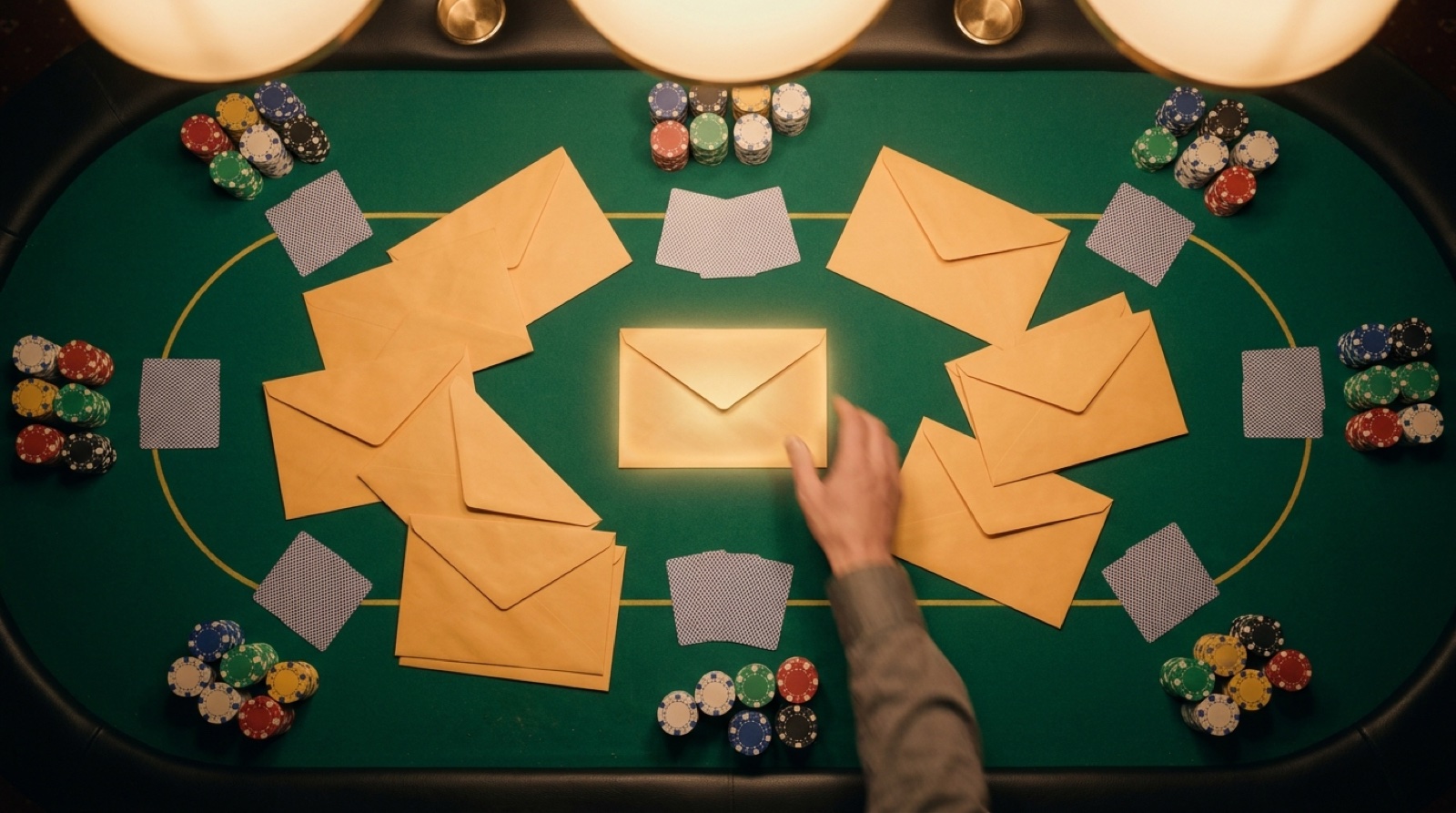
Mystery bounty psychology is simple: the envelope makes a normal poker player feel like a lottery player. You stop asking whether the shove is profitable. You start asking what if this is the big one.
That one thought can wreck a tournament. Mystery bounties are not bad. They are fun, they bring softer fields, and they create spots where a covering stack can call wider than usual. The leak is treating an unknown prize like permission to ignore price, stack depth, pay jumps, and your total tournament budget.
The best players enjoy the format without surrendering to it. They know when the bounty is real equity and when it is just a story their brain is telling them.
How mystery bounty tournaments change your brain
In a normal tournament, the money is abstract until the late stages. You think in chips, blinds, pay jumps, and table position. In a mystery bounty, the payout suddenly becomes visible in a very different way. Someone busts a player, walks to the bounty desk, opens an envelope, and the room reacts.
That reaction matters. A big envelope at the next table makes your next marginal call feel better. A small envelope makes you think you are due. Neither feeling belongs in the hand.
GTO Wizard's mystery bounty guide makes the core point well: once the bounty phase starts, you should think about the average bounty value remaining, not the one massive prize everyone is staring at. The top prize is exciting. The average bounty is the number that belongs in the decision.
Before the bounty phase, play poker
The first mistake is chasing a bounty before bounties even exist. In many mystery bounty events, knockouts do not pay until the money bubble, Day 2, or another posted threshold. Before that point, you are playing a normal tournament with a future incentive attached.
That does not mean stack building is irrelevant. A bigger stack gives you more chances to cover players later. It also gives you more ways to pressure medium stacks near the bubble. But taking a bad flip early because you want to be a bounty hunter is just gambling with a nicer label.
BBZPoker's strategy intro divides the format into phases for the same reason. The pre-bounty tournament and the active bounty phase are different games. If you blend them together, you will either arrive too short to win envelopes or torch chips before the format starts paying for knockouts.
Use average bounty value, not envelope fever
Once the bounty phase starts, every covered player has extra value attached to them. The practical calculation starts with one question:
Average bounty value = remaining bounty prize pool / remaining players with bounties.
You do not need perfect math at the table. You need enough discipline to avoid two ugly mistakes:
- Calling too wide because one huge bounty is still out there.
- Folding too tight because the hand looks uncomfortable in a normal tournament.
Upswing Poker's bounty-phase breakdown explains why ranges often widen right after the bubble bursts, then tighten again as the field gets smaller and pay jumps matter more. That is the point most players miss. The bounty is not a permanent excuse to gamble. Its value changes as the tournament changes.
Covering players is power, but only if you keep the stack
Mystery bounty players love saying they want to cover the table. Good. Covering stacks can win bounties. Short stacks cannot.
The problem is that some players use that idea backward. They risk the covering stack in thin spots, lose it, and then spend the next orbit watching other people collect envelopes. Your stack is a tool. Do not burn the tool because you like the sound it makes.
When you cover a player, ask:
- What is the shove size?
- How many players are left to act?
- How much of my covering stack disappears if I lose?
- How large are the next pay jumps?
- Is the average bounty still large enough to justify the risk?
If you cannot answer those questions, slow down. The envelope will still be random after you make a better decision.
Short stacks become targets
The other side of mystery bounty psychology is being the player everyone covers. When you are short in the active bounty phase, your shove gets called wider because your bounty adds value to the pot. Your fold equity drops.
That does not mean you should freeze. It means your shoving range has to be more honest. Hands that rely on folds lose value when the table is paid to look you up. Hands that play well when called become more important.
This is why min-cashing with crumbs can be a trap. Yes, you made the money. But if you enter the bounty phase with no ability to cover anyone, you are often playing defense while the big stacks play the format.
Track the tournament like an investment, not a story
Mystery bounty events produce messy personal accounting. A player fires three bullets, wins one medium envelope, cashes small, and tells the story like it was a win. Maybe it was. Maybe the full event was still a losing investment.
Track the whole thing:
- Buy-ins and re-entries
- Travel, hotel, food, and tips if it was a trip
- Main prize cash
- Total bounty prizes
- Number of bounty spots won
- The stage where you took your biggest risk

Download Poker Stack Now
"PokerStack is THE app you need to have as a live poker player."
Poker.com


Use Poker Stack to keep that record clean. A mystery bounty result should not live only in your memory, because memory will remember the envelope and forget the second bullet. For a tournament-specific setup, read Tournament bankroll tracker: buy-ins, re-entries, and travel costs.
A simple decision checklist for bounty spots
Before you call off or reshove for a bounty, run this checklist:
- Is the bounty phase active?
- Do I cover the player?
- What is the average bounty worth now?
- How much does losing hurt my ability to cover others?
- Are pay jumps or final-table pressure becoming more important?
- Would I still consider this spot if the envelope were boring?
That last question is not math, but it catches a lot of bad decisions. If the only reason you like the spot is the fantasy of opening the biggest envelope, you are no longer playing strategy.
What to study after a mystery bounty event
Do not review only the hand where you busted. Review every spot where the bounty changed your decision.
| Spot | What to review | Common leak |
|---|---|---|
| Pre-bounty phase | Did you take extra risk before knockouts paid? | Playing bounty poker too early |
| Bubble | Did you build a playable covering stack? | Min-cashing too short to hunt |
| Early bounty phase | Did you add average bounty value to calls? | Ignoring bounty equity or overchasing it |
| Late stage | Did pay jumps start to matter more than envelopes? | Still playing like the bubble just burst |
If you want a broader study routine, pair this with Study poker without solvers. If you want a related bounty format primer, Poker Stack's mystery bounty cheat sheet covers when to chase envelopes from a more direct strategy angle.
Final rule: respect the gamble, price the decision
Mystery bounties are supposed to feel fun. The room gets louder. The envelopes create sweat. Recreational players show up because the format gives them a chance at a massive prize without winning the tournament.
Enjoy that part. Just do not let it write your ranges for you.
The better rule is boring and profitable: respect the gamble, then price the decision. Use average bounty value, protect the stack that lets you cover players, account for pay jumps, and track the real tournament result afterward.
If the article you tell yourself after the event starts with the envelope and skips the total cost, open Poker Stack before you play the next one.
Related Poker Stack reading
Mystery bounty strategy: when to chase envelopes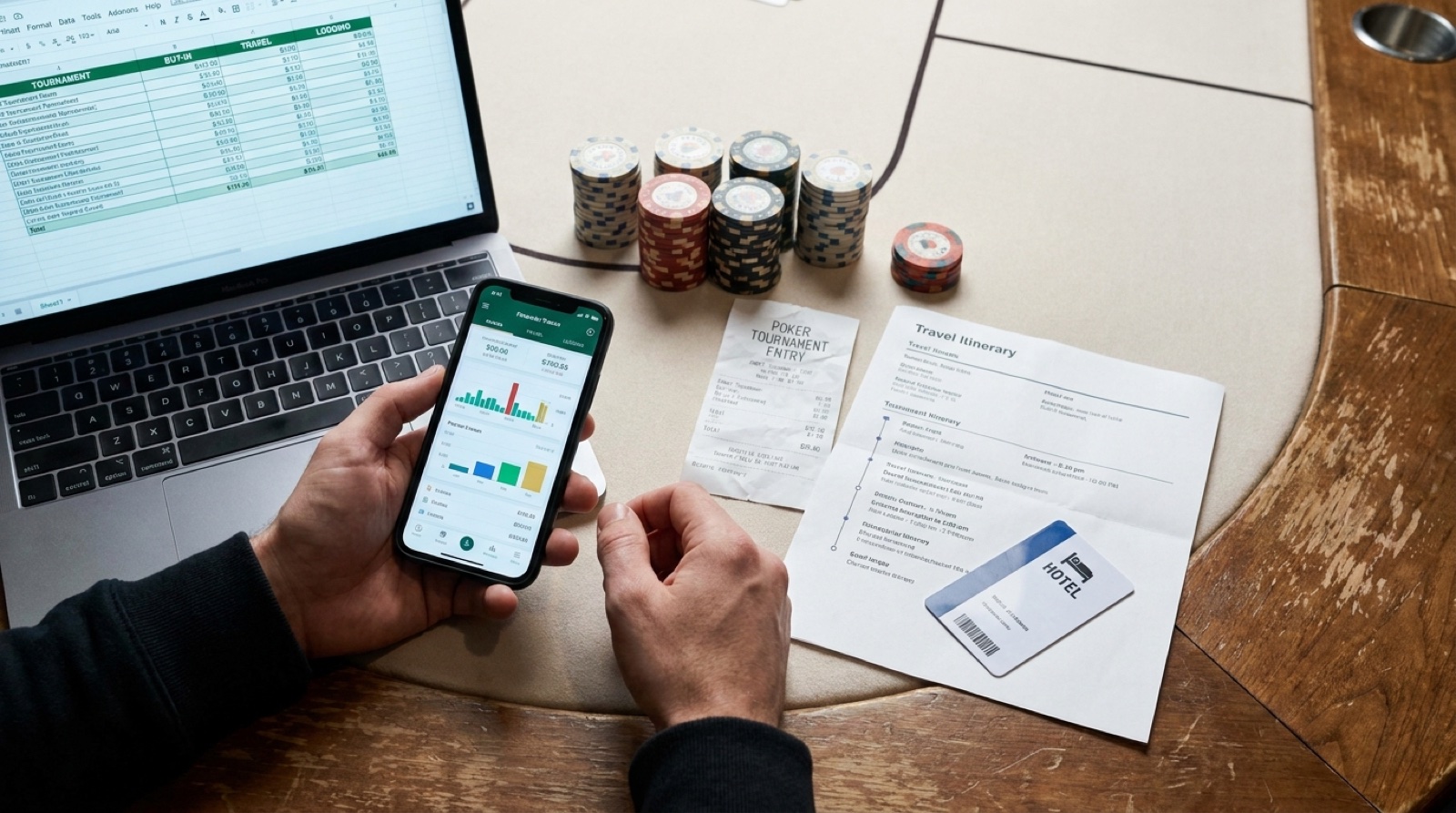 Tournament bankroll tracker: buy-ins, re-entries, and travel costs
 Poker satellite strategy: when folding aces preflop is right
 Poker odds calculator vs bankroll tracker: which app solves which problem?
Useful outside references for this topic include PokerCoaching's mystery bounty overview and Pokerfuse's format guide.
Read our blog