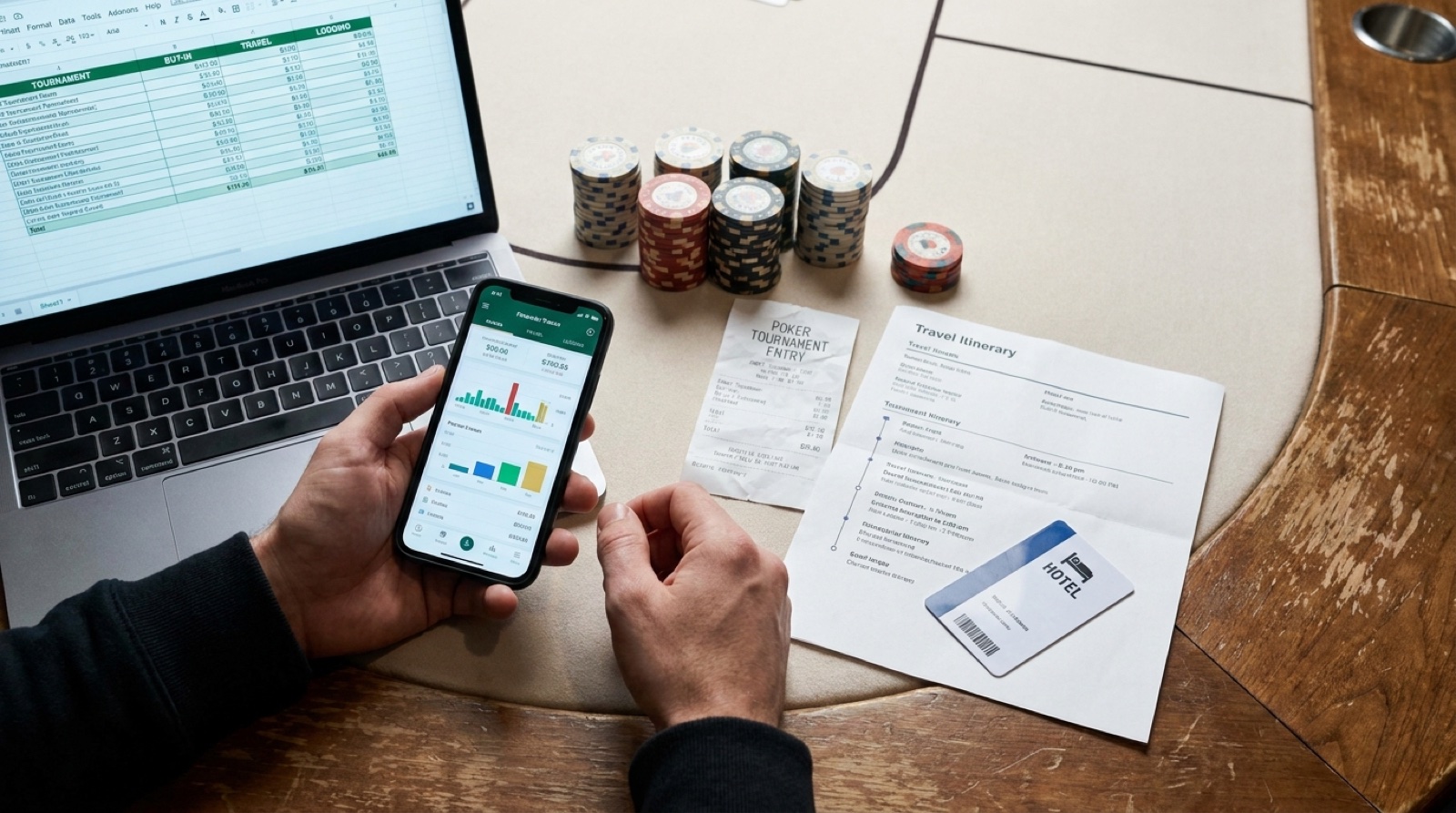
 Tournament bankroll tracker: buy-ins, re-entries, and travel costs
Most poker players learn one rule early: never look for reasons to fold pocket aces before the flop. In a normal cash game or regular tournament, that instinct is correct.
Satellites are different. A good poker satellite strategy cares less about finishing with the biggest stack and more about winning the seat. If every qualifying player gets the same prize, extra chips can lose value fast near the bubble.
This is why the uncomfortable idea is real: in a specific satellite bubble spot, folding aces preflop can be better than taking a hand you are favored to win.
It is not a party trick and it is not a blanket rule. If you use it in the wrong tournament, at the wrong stack depth, or far from the bubble, you are just burning value.
Why satellite poker strategy breaks normal poker instincts
A regular tournament pays more for first than for a min-cash. Chips still do not equal cash in a straight line, but building a stack can create a path to a larger payout.
A multi-seat satellite changes the question. The goal is usually to finish inside the qualifying group. Once ten seats are paid, tenth and first may get the same ticket.
GTO Wizard's satellite guide explains the key point clearly: when all prizes are equal, there is no extra prize for having the biggest stack. The player who survives with one ante can win the same ticket as the player holding half the chips in play. That changes the strategy near the bubble.
WSOP satellites make the idea easy to see. PokerNews listed 2026 WSOP satellites where players could win entries into events for smaller buy-ins, including direct entries or casino value chips in larger daily satellites. The prize is the seat or entry value, not a bonus for ending with the tallest stack.
The rare spot where folding aces can be right
Folding aces preflop in a satellite can make sense when several things line up at once:
- You are on or very near the satellite bubble.
- The satellite awards multiple equal seats.
- You have a stack that is very likely to qualify if you fold.
- There are shorter stacks that must survive blinds and antes.
- The all-in comes from a player who can hurt you badly or bust you.
- Winning the pot does not improve your prize much, because one seat is still one seat.
The most important line is the last one. If winning the hand does not get you a better prize, but losing the hand can cost you the seat, the hand value alone is not enough.
GTO Wizard's article on folding aces preflop gives a direct satellite example: five players remain, four seats are paid, and a covered player may still need to fold every hand against a shove because the stack is already comfortably ahead of shorter players. The hand can be ahead and still not be worth the risk.
A simple satellite bubble example
Say a satellite has 10 players left and 8 seats paid. Every seat is worth a $1,100 tournament entry.
| Player group | Stack | What matters |
|---|---|---|
| You | 34 big blinds | Very likely to qualify by folding |
| Big stack | 55 big blinds | Can cover you and apply pressure |
| Four middle stacks | 14 to 24 big blinds | Need to avoid each other |
| Four short stacks | 1 to 6 big blinds | Likely to be forced all-in soon |
The big stack shoves. You look down at pocket aces.
In a normal tournament, this is a dream. In this satellite spot, calling creates a bad trade. If you win, you still win one seat. If you lose, you may finish with nothing while short stacks get a chance to sneak through.
That is the seat-value problem. Your aces may be a huge favorite against one hand, but they are not 100 percent. If folding already gives you a very high chance to qualify, calling can turn a nearly locked seat into a gamble you did not need.
Why bubble pressure matters more than hand strength
ICM stands for independent chip model. It tries to estimate what a tournament stack is worth based on stacks and payouts. BBZ Poker's 2026 bubble strategy article describes the important shift: under ICM, folding can have real expected value because you cannot bust while other players still can. That is why bubble pressure can make strong hands play tighter.
In satellites, that pressure can become extreme because the top prize is capped. Extra chips stop helping as much when they do not move you into a better prize.
This does not mean you should pass every premium hand near a satellite bubble. Sometimes your stack is not safe. Sometimes the shorter stacks have enough chips to wait. Sometimes the shover is short enough that losing barely hurts you. Sometimes winning the pot does lock your seat.
The question is not, "Do I have the best hand?" The question is, "Does playing this hand improve my chance to win a seat more than it risks the seat I already have?"

Download Poker Stack Now
"PokerStack is THE app you need to have as a live poker player."
Poker.com


Satellite strategy is not normal tournament strategy
Do not carry this lesson into the wrong format.
In regular MTTs, folding aces preflop is almost never the right default. In cash games, it is even worse. You make money by getting called with the best hand and accepting variance.
Satellites are special because the payout shape is special. Equal seats create a capped upside. The bubble can turn chip preservation into the best play.
A useful rule: the more your current stack already secures the target prize, the more careful you should be about taking covered all-ins. The less secure your stack is, the more you may still need to win chips.
How to think before calling off in a satellite
Before you put your tournament life at risk, run through this quick checklist:
- How many seats are paid?
- How many players remain?
- How many stacks are shorter than mine?
- Can the player all-in eliminate me or cripple me?
- Does winning the pot change my chance of qualifying much?
- Can I likely fold into a seat because other players are under more pressure?
- Is this a winner-take-all satellite? If yes, this logic changes.
That last point matters. A winner-take-all satellite is much closer to a normal tournament because only first place gets the prize. You cannot fold into one of several equal seats if there is only one seat.
The bankroll lesson behind the aces fold
Satellite players often treat buy-ins as cheap lottery tickets. That is how a good route into bigger events becomes a bankroll leak.
A $70 satellite does not feel expensive if it can lead to a major event. Ten missed attempts, a few re-entries, travel, food, and a target-event add-on can make the real cost much higher than the first buy-in.
If you use satellites to qualify for bigger events, track them as their own line item. Do not hide them inside your general tournament results.
At minimum, log:
- Satellite buy-in and fee
- Number of re-entries
- Target event value
- Seat won or missed
- Travel or hotel costs tied to the attempt
- One bubble hand or decision worth reviewing
- Whether the shot fit your bankroll plan
This is where Poker Stack fits naturally. If you are firing satellites to reach bigger buy-ins, use Poker Stack to track the attempts, the total spend, and the real result after the seat chase is over.
You can also compare those results against your normal tournament records. Start with the tournament bankroll tracker guide, then review how study and tools fit into the bigger plan with a weekly study routine and the odds calculator vs bankroll tracker breakdown.
The practical decision rule
Folding aces preflop is not the goal. Winning the seat is the goal.
In a satellite, especially near the bubble, do not ask only whether your hand is ahead. Ask whether playing the hand helps you win a seat or risks a seat you already have.
If the upside is still one ticket and the downside is busting before shorter stacks, survival can beat chip accumulation. That is the whole point of disciplined poker satellite strategy.
Related Poker Stack reading
Tournament bankroll tracker: buy-ins, re-entries, and travel costs Poker odds calculator vs bankroll tracker: which app solves which problem?
 Study poker without solvers: a weekly routine for normal players
 VR poker review: gimmick or real practice tool?
Read our blog