 High Stakes Poker TV show statistics
Useful context if you like televised high-stakes formats and want to compare action-heavy games.
Direct Answer: Short deck poker is a niche format in 2026. It still appears in high roller series, private cash games, and some Asian-market rooms. Learn the 36-card rules, confirm the hand order, and track short deck separately because the variance is different from Hold'em.

Short deck poker strategy still matters in 2026, but the game has moved into a narrower lane. You are less likely to find it as a casual online lobby game than you were a few years ago. You are much more likely to see it in private cash games, Asian live rooms, and high roller festivals where players want fast action and bigger pots.
That makes short deck a strange format to learn. It has survived as a specialist game rather than a default grind. If you treat it like Texas Hold'em with fewer cards, you will overvalue top pair, misread draws, and get surprised by how often stacks go in.
Short deck, also called 6+ Hold'em, removes every 2, 3, 4, and 5 from the deck. That leaves 36 cards: six through ace in each suit. Players still make the best five-card hand from two hole cards and five community cards, but the missing low cards change almost every poker instinct.
PokerNews' short deck rules guide gives the clean rules version: smaller deck, familiar betting rounds, and a hand-order adjustment that every Hold'em player needs to learn before sitting down.
The most common high-stakes version is ante-only. Everyone posts an ante, and the button often posts an extra ante. That puts money in the pot before anyone looks down, which is one reason the game creates so much action.
Short deck is alive as a niche game in 2026. The public boom cooled off because most online players went back to Hold'em, PLO, mystery bounty tournaments, and other formats with easier liquidity. Short deck still shows up where the player pool is smaller and richer: high roller series, private games, and rooms with strong Asian action.
Triton is the clearest signal. Its Jeju 2026 schedule included short deck events, including six-figure buy-ins, which tells you the format still has a home among players who like volatile, ante-heavy poker. You can see that in Triton's own Jeju schedule announcement, which listed Short Deck Ante-Only events alongside the no-limit and PLO schedule.
For most regular players, that means short deck is more of a specialist game than a weekly default. Learn it if your local room spreads it, if your private game wants it, or if you enjoy formats where preflop equities run closer and people gamble wider.
The big rule change is simple: in the common short deck hand order, a flush beats a full house. Many rooms also rank a straight above trips. Before you play, check the house rules because not every room uses the same order.
The reason is math. With only nine cards in each suit, flushes are harder to make. With fewer ranks in the deck, full houses and straights appear more often than Hold'em players expect. PokerNews' short deck hand order explain the flush-over-full-house rule, and PokerStars' 6+ Hold'em guide is useful if you want another rules reference before a home game.
Aces can still be high or low for straights. The low straight is A-6-7-8-9, not A-2-3-4-5. That one detail alone causes a lot of expensive table arguments.
Short deck creates more playable starting hands because the weak low cards are gone. Hands like K-Q, Q-J, J-10, and suited connectors appear stronger because they connect with boards more often. Pocket pairs also make sets more often because there are fewer cards left in the deck.
The trap is thinking every pretty hand is a premium. Top pair top kicker loses some of its shine when the board is packed with straight cards. Two pair is not as comfortable. A set is strong, but the river can still punish you when straight and flush possibilities are everywhere.
If you already read Poker Stack's poker strategy hub, the easiest mental adjustment is this: short deck rewards nut awareness. You need to ask which hands can make the strongest possible version by the river, not just which hand looks ahead right now.
Short deck's center of gravity is high-stakes live poker, private apps, casino festivals, and regions where the format already has cultural momentum.
Asia still matters. Short deck grew through Macau and Asian high roller circles, then got pushed into the wider poker conversation by televised Triton games. Paul Phua's short deck primer is still a good snapshot of that high roller connection and the ante-only format Triton helped popularize.

Download Poker Stack Now
"PokerStack is THE app you need to have as a live poker player."
Poker.com


For tracking purposes, do not mix short deck results into your normal Hold'em graph. The swings are different, the all-in frequency is different, and your edge may be smaller while you learn the hand order. Track it as its own game type in Poker Stack so you know whether the format is making you money or just giving you action.
Start tighter than the table wants you to play. The format feels loose because the deck is stronger, but that does not mean every broadway hand is worth a stack. Position matters, nut potential matters, and dominated draws can become expensive fast.
Respect connected high cards. A-K, A-Q, K-Q, Q-J, J-10, and suited broadways gain value because they make strong top pairs and straights. Pocket pairs also gain value because sets arrive more often, but a set with no redraw can still become uncomfortable on coordinated boards.
Do not overplay one pair. This is the leak Hold'em players bring with them. A hand like A-K on K-Q-J feels good until the pot gets large and several opponents can already have straights, pair-plus-draws, or strong redraws.
Think hard before chasing non-nut draws. A straight is strong, but in short deck the board often produces obvious straight patterns. If your draw makes the lower end, you may get paid only when you are behind.
If you want to try short deck at home, keep the first session simple. Use the common hand order, print or share the hand order, and agree before the game starts whether flushes beat full houses and whether straights beat trips.
Run it as a small-stakes orbit first. The ante-only structure can make pots feel bigger than a normal blind game, especially for players who have never played it. If your table already enjoyed bomb pots, the same host mindset applies. Set expectations, explain the action, and give cautious players a low-pressure way in. Our guide to introducing bomb pots to a home game has the same practical lesson: new formats work better when the table understands the rules before the first big pot.
One more practical note: remove the 2s through 5s before the game starts and keep them away from the table. Nothing kills a new format faster than a stray card from the full deck getting shuffled back in.
Study it if you have access to real games. For players whose volume is normal Hold'em tournaments or local 1/3 cash, other study topics should come first. If your room spreads short deck, your private game asks for it, or you watch high roller streams, learning the format pays off quickly because many casual players misread the hand order.
Start with rules, then learn equity. CardPlayer's short deck guide gives a useful overview of the different hand orders and why you must confirm house rules. After that, track every session separately and review the biggest all-in pots.
Use poker tracking as your reality check. If short deck feels fun but your bankroll line keeps dropping, the game is telling you something. If the graph is strong over enough hours, you may have found a niche where your table still makes basic mistakes.
Short deck poker in 2026 is a sharper, smaller market. That is good news if you like learning formats before your opponents do, and bad news if you want endless easy traffic at low stakes.
The best way to approach it is practical. Learn the 36-card rules, confirm the hand order, respect the ante structure, and track it separately. If the games are good, you will know. If the secret is only that high rollers enjoy gambling wider, your bankroll graph will know that too.
High Stakes Poker TV show statisticsUseful context if you like televised high-stakes formats and want to compare action-heavy games.
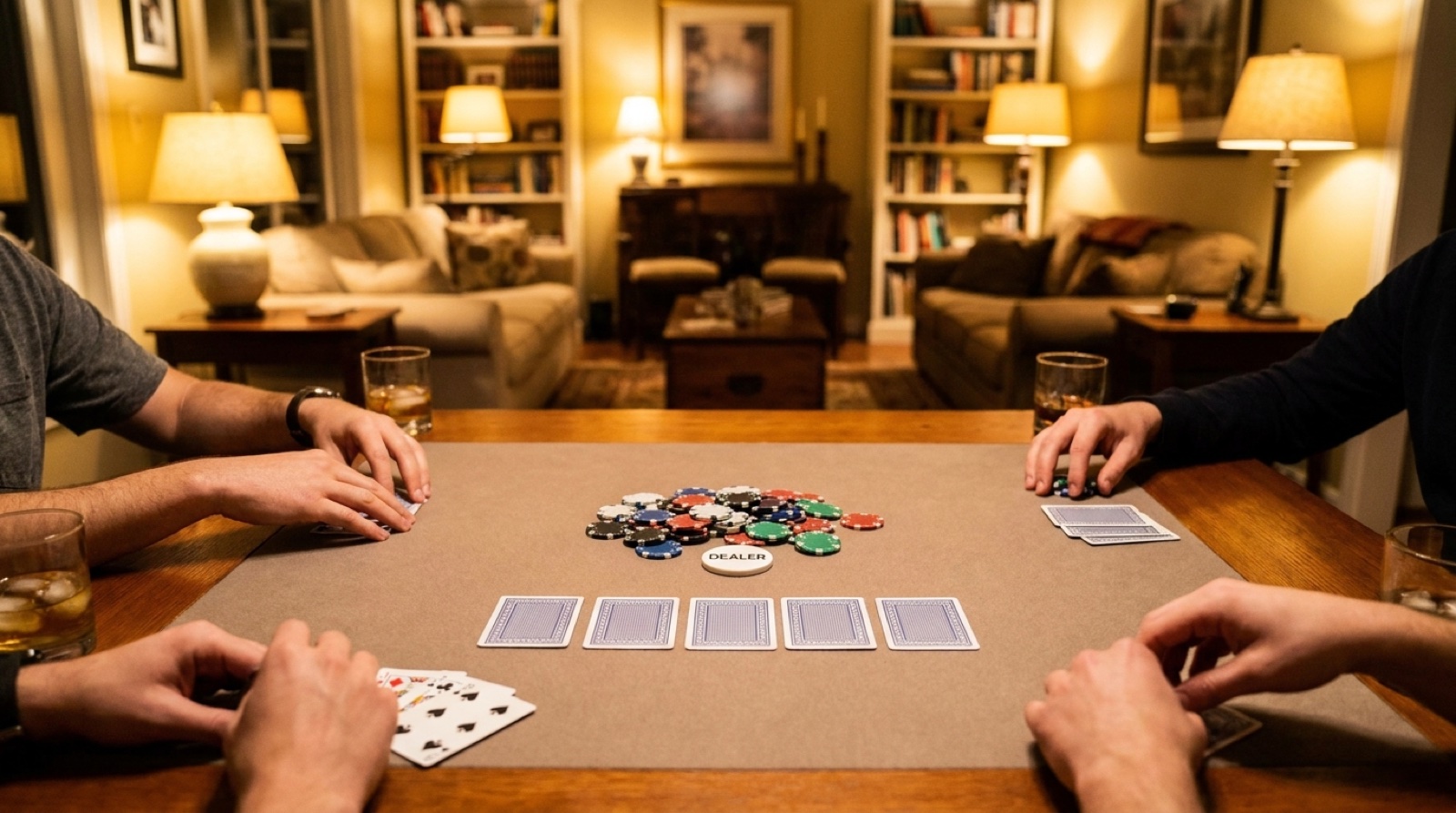 How to introduce bomb pots to your home game
A host-focused guide for adding action formats without confusing the table.
Read our blog
Download Poker Stack Now
Download Poker Stack from the App Store and start tracking your sessions today.
Do you enjoy playing a lot of poker? This app is made for you.