 Scoop or die: the double board bomb pot strategy guide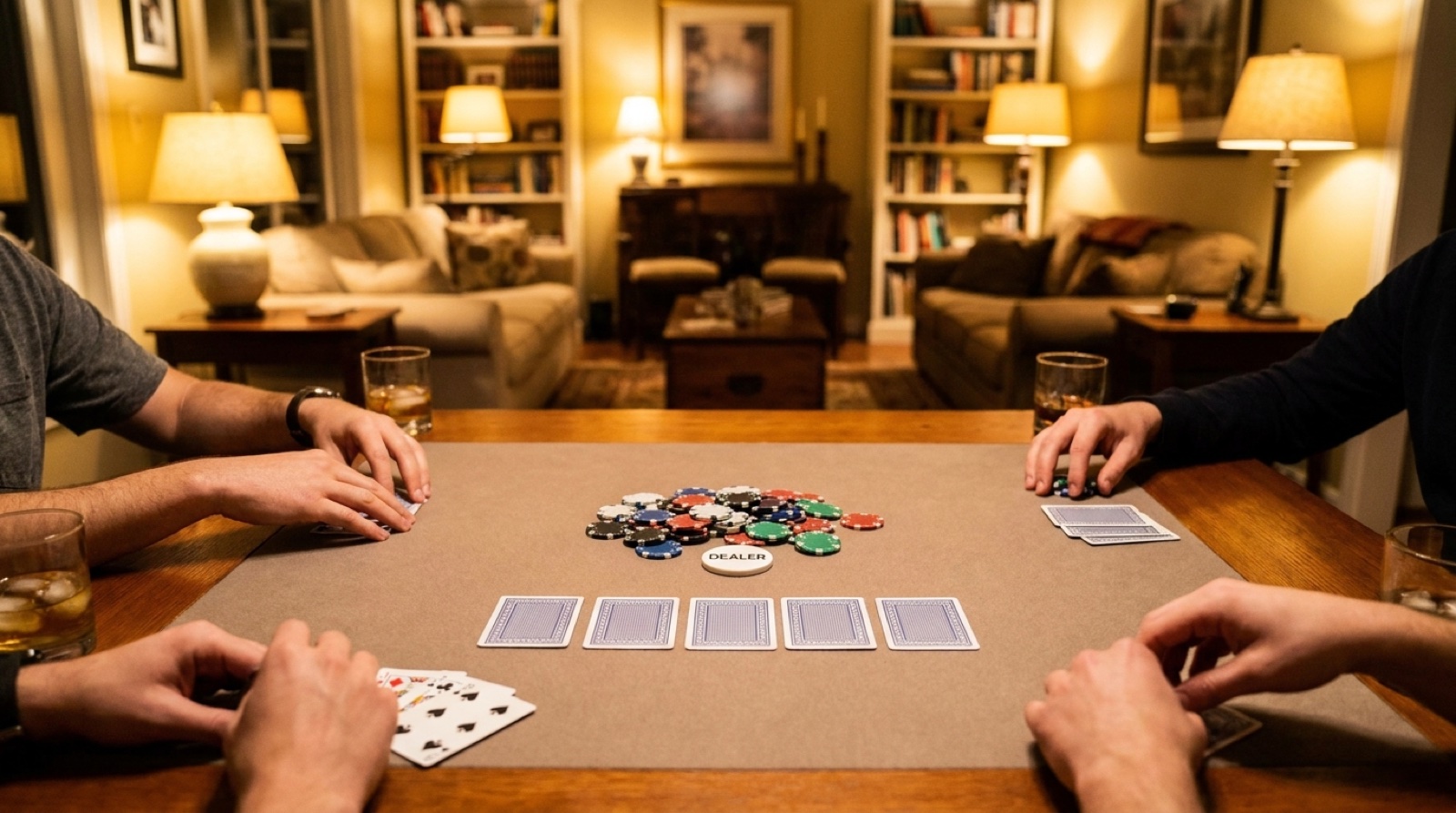
Bomb pot rules can turn a slow home game into a real action game, but only if the host explains them clearly. Start small: one bomb pot per orbit, a fixed ante from every player, no preflop betting, then play normal postflop poker from the flop. That keeps the game fun without making cautious players feel trapped.
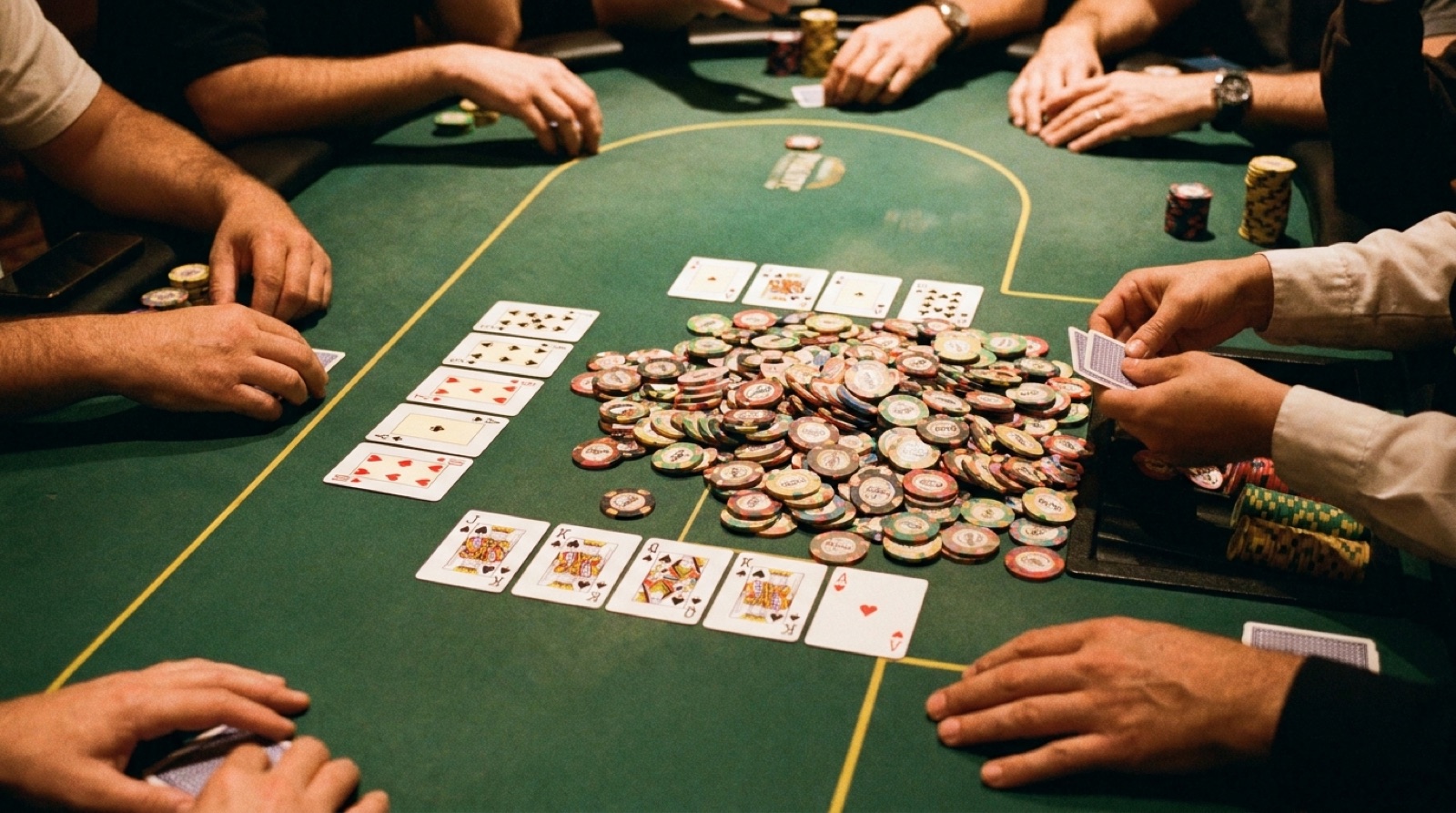
A bomb pot is simple on the surface. Everyone puts in a forced amount before the hand, the dealer runs a flop, and the hand starts from there. Many rooms use double board bomb pots too, where two separate boards are dealt and the best hand on each board wins half the pot. If you want the deeper strategy side, read our double board bomb pot strategy guide.
Start with a version people can understand
The easiest home game format is a single board No-Limit Hold'em bomb pot. Every player antes one big blind, the dealer deals everyone a normal hand, skips preflop betting, and puts out a flop. From there, action starts left of the button and betting works like a normal Hold'em hand.
Keep the first version boring on purpose. Do not add PLO, double boards, stand-up rules, or random wild cards on the first orbit. Players need to feel the rhythm before you add chaos.
If your group already knows Omaha, you can try a single board PLO bomb pot later. Just remind everyone that standard Omaha still uses exactly two hole cards and three board cards, as explained in the WSOP Omaha rules guide. That detail matters more when the pot is already bloated.
Pick the ante before cards are in the air
The ante should match your table, not your most action-hungry player. For a $0.50/$1 home game, a $1 bomb pot ante is plenty. For $1/$2, use $2 or $5 depending on how deep everyone is. If you are not sure, start lower.
The host's job is to protect the game. A bomb pot that creates one huge laugh is not worth it if two players leave early because they felt priced into gambling. The goal is better action, not a table tax.
Write the rule down in the group chat before the game starts: "One bomb pot per orbit, everyone antes $2, single board Hold'em, postflop betting starts left of the button." Clear beats clever.
Handle the button and action cleanly
Use the normal dealer button. The button does not post a special blind unless your group agrees. Everyone antes the same amount, cards are dealt, and the flop comes out with no preflop betting.
After the flop, action starts with the first active player left of the button. That mirrors standard postflop position in Hold'em, which keeps the hand familiar. PokerNews has a useful primer on Texas Hold'em rules if you need a clean reference for newer players. The official Poker TDA rules are also useful when you want a neutral source for tournament-style procedures.
For double board bomb pots, deal both flops before betting starts. Then deal both turns before turn betting, and both rivers before river betting. Half the pot goes to the winner of board one and half goes to the winner of board two. If the same player wins both boards, they scoop.
Explain double boards before money gets weird
Double board bomb pots are where home games get confused. Say the key rule out loud: each board is its own hand, and each board awards half the pot. Players can use the same hole cards for both boards in Hold'em, or exactly two hole cards for each board in Omaha.
Use chips to make it visual. Put one stack of chips near the top board and one near the bottom board when explaining it. People understand split pots faster when they can see the split.
Once your group is comfortable with the format, the strategy gets more interesting than simply chasing a strong hand on one board. In a double board bomb pot, a made hand on one board can still be vulnerable when you have little or no equity on the other, and the right decision can change with the number of players and board texture. See how a double-board solver approaches these spots, with examples from No-Limit Hold’em and PLO.

Download Poker Stack Now
"PokerStack is THE app you need to have as a live poker player."
Poker.com


The common leak is chasing only half. A player can make a strong hand on one board and still be in bad shape if another player has equity to scoop both. That is why bomb pots can be fun but brutal for bankrolls. Poker Stack helps home game players track whether these extra-action nights are actually good for them over time. You can get the app from the Poker Stack homepage.
Make a house rule for all-ins and side pots
Bomb pots create multi-way pots fast, so side pots happen more often. Before the first bomb pot, decide who manages side pots and how slow the game should go when players are all in.
Use the same all-in and side-pot logic you use in normal poker. The main pot is contested by everyone who put money in. Side pots are only contested by players who matched those extra bets. If your group is loose with side pots, review a basic explanation such as Upswing Poker's guide to side pot rules.
Do not rush these hands. A messy side pot in a double board bomb pot can ruin the mood faster than a bad beat.
Keep the first session measured
The best home game change is the one people ask to play again. Try bomb pots for one session, then ask the table if the ante felt right and whether the format was clear.
If the table loved it, add one extra wrinkle next time: double boards, PLO, or a slightly bigger ante. If the table was split, keep the format but lower the ante. If two players hated it, make bomb pots optional or run them only when everyone agrees.
This is also where tracking helps. Home game hosts remember the wild hands, but numbers remember the full night. Log your sessions in Poker Stack and tag bomb pot nights in the notes. After a few games, you can see whether the action improved the game or just made your graph look like a warning sign. For more on action formats, see our PLO6 variance survival guide and our post on why players are moving toward 5-card PLO.
A simple home game bomb pot script
If you are hosting, use plain language before the first hand:
- "Once per orbit, we will play a bomb pot."
- "Everyone antes $2 before cards are dealt."
- "There is no preflop betting."
- "We deal the flop, then betting starts left of the button."
- "Tonight is single board Hold'em only. If everyone likes it, we can try double board next time."
That script avoids most arguments. It tells players when bomb pots happen, what they cost, how the hand starts, and what version you are playing.
Related Poker Stack reading
Scoop or die: the double board bomb pot strategy guide The bloodbath variance of PLO6: a survival guide
Bomb pots work best when the host keeps them clear, affordable, and repeatable. Add action slowly, track the results, and protect the game from the one player who wants every hand to become a circus.
Read our blog