 Poker bankroll management: cash and tournament rules
Poker tournament bankroll management is different from cash-game bankroll management. A tournament player needs more buy-ins because payouts are top-heavy, fields are large, and long dry spells are normal. A good starting rule is 100 average buy-ins for regular MTTs and 200 or more for big-field, turbo, or high-variance schedules.
This page focuses on tournaments. For cash games, live poker, online cash, and full bankroll charts, use the main poker bankroll management guide.
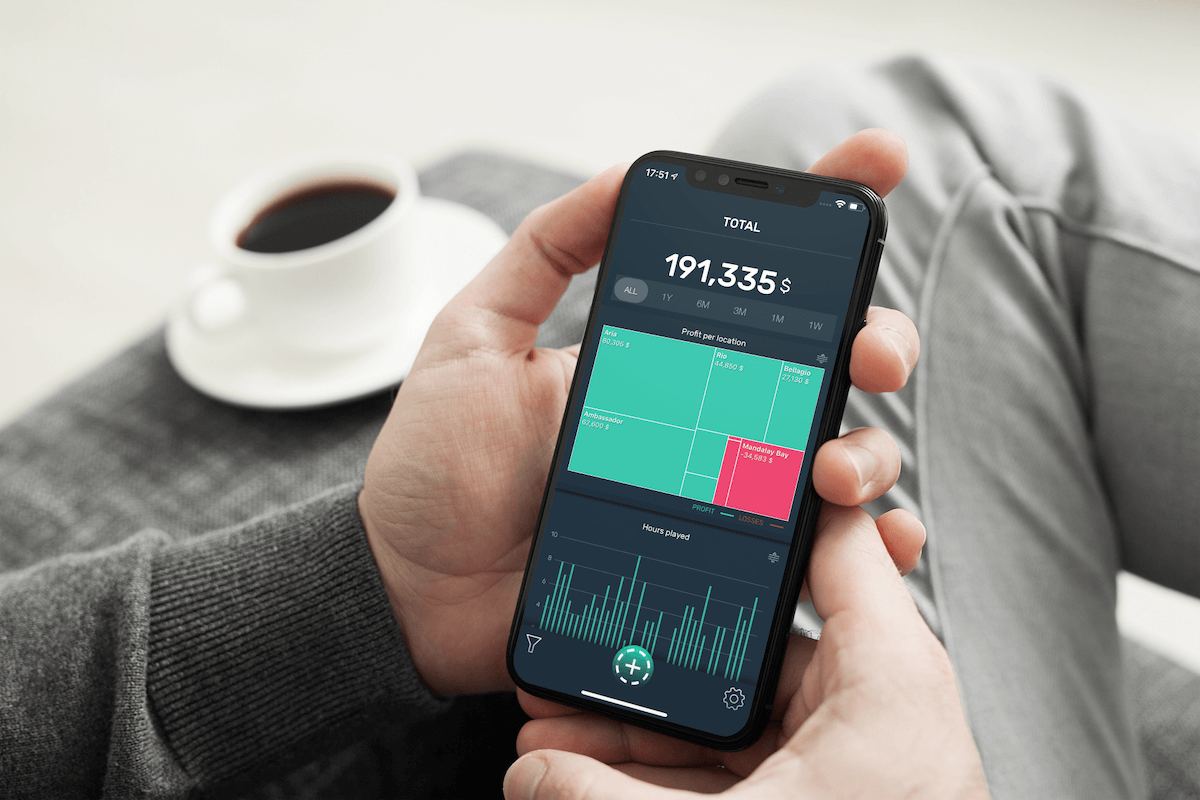
Track your own results: The Poker bankroll tracker app guide explains what Poker Stack records, when an app beats a spreadsheet, and how to review sessions with less guesswork.
Tournament bankroll rules by format
The key number is average buy-in, often shortened to ABI. If you play ten tournaments for a total of $220, your ABI is $22. Bankroll planning should use ABI, not the biggest event on your schedule.
| Format | Practical minimum | Safer bankroll | Why |
|---|---|---|---|
| Single-table SNGs | 50 buy-ins | 75-100 buy-ins | Smaller fields, but rake and volume still matter |
| Small-field MTTs | 75-100 ABI | 150 ABI | Fewer players means fewer extreme downswings |
| Large-field MTTs | 150 ABI | 200-300 ABI | Top-heavy payouts create long gaps between big scores |
| Turbo and hyper tournaments | 150 ABI | 250+ ABI | Short stacks and fast blinds raise variance |
| Live tournaments | 100 ABI | 150-250 ABI plus expenses | Travel, tips, food, and hotels change the real cost |
Primedope's tournament variance calculator is useful because it shows how rough MTT variance can be, even when a player has a positive ROI. Upswing Poker also separates bankroll needs by format because tournaments require more protection than many cash games.
How to calculate average buy-in
Average buy-in keeps you honest. Many players say they play $20 tournaments, but their real schedule includes $55 shots, $109 Sunday events, and re-entries. The bankroll should be based on the real average, not the cheapest tournament you register.
| Example schedule | Total cost | Events | ABI |
|---|---|---|---|
| Five $5 events and five $10 events | $75 | 10 | $7.50 |
| Six $11 events, three $22 events, one $55 event | $187 | 10 | $18.70 |
| Four $33 events, four $55 events, two $109 events | $570 | 10 | $57 |
If your ABI is $20 and you want 100 buy-ins, you need a $2,000 bankroll. If your ABI is $57 and you want 150 buy-ins, you need $8,550. This is why one or two bigger events can quietly change the whole bankroll plan.
Re-entry and add-on rules
Re-entries are where tournament bankrolls get messy. A $22 event is not really a $22 event if you fire three bullets. If re-entry is part of your plan, count the planned bullets before you register.
- Set a maximum number of bullets before the first hand.
- Track each re-entry as part of the tournament cost.
- Do not re-enter just because the field looks soft if your bankroll says no.
- Late-register only when the stack size and field situation still make sense.
- Separate planned re-entries from emotional re-entries after a bad beat.
The same rule applies to add-ons. If an add-on is close to mandatory in the format, include it in the planned cost. If it is optional and bad value, skip it.
Shot-taking rules for tournaments
Shot-taking is normal, but it needs a hard limit. A good shot should not damage the schedule you can actually afford.
| Bankroll | Normal ABI | Reasonable shot | Stop rule |
|---|---|---|---|
| $500 | $3-$5 | One $11 event | Return to micros if it misses |
| $2,000 | $10-$20 | One or two $55 events | No extra bullets outside the plan |
| $10,000 | $50-$75 | Selective $215 events | Drop back if the bankroll falls below the normal-game floor |
A shot is only a shot if you can walk away after it fails. If you keep registering bigger events to win it back, it is not bankroll management anymore.
When to move down
Tournament players often resist moving down because a big score feels close. The bankroll does not care. If the number has fallen below your buy-in rule, the schedule needs to change.

Download Poker Stack Now
"PokerStack is THE app you need to have as a live poker player."
Poker.com


- Move down when your bankroll drops below your planned ABI cushion.
- Cut the highest buy-ins first instead of shrinking every event equally.
- Pause re-entry tournaments if rebuys are driving losses.
- Reduce turbos and hypers when variance is already hurting the bankroll.
- Review whether your ROI comes from one heater or a real sample.
ICMIZER can help study push-fold and ICM decisions after a session, but it should be treated as a study tool. Do not use real-time advice during online play unless the poker room clearly allows it.
Online vs live tournament bankrolls
Online tournament players can build volume quickly. That is good for learning, but it also means a downswing can arrive fast. If you multi-table, count every buy-in and every re-entry. Ten small events can become a large nightly risk.
Live tournaments move more slowly, but the true cost is often higher. Travel, parking, tips, food, hotels, and time away from work all matter. A $150 live tournament can easily cost more than $150 before the first hand is dealt.
| Cost | Online | Live |
|---|---|---|
| Buy-in | Clear and easy to track | Clear, but may include fees and add-ons |
| Re-entry | Fast and tempting | Often easier to resist, but still expensive |
| Expenses | Usually low | Travel, food, tips, hotel, parking |
| Volume | High | Low |
What to track after every tournament
PokerNews has covered bankroll tracker apps because serious players need clean records. With Poker Stack, you can record each tournament and review whether the schedule is actually profitable.
| Track | Why |
|---|---|
| Buy-in, fee, re-entry, add-on | Shows the real tournament cost |
| Format and field size | Separates SNGs, MTTs, turbos, bounties, and satellites |
| Cash and finish position | Lets you calculate ROI over time |
| ABI for the session | Shows whether your schedule is drifting too high |
| Bust-out note | Helps separate variance from repeat mistakes |
The guide to what to record after every poker session gives a broader tracking checklist.
FAQ
How many buy-ins do I need for poker tournaments?
A regular MTT player should often use at least 100 average buy-ins. Big-field, turbo, PKO, and high-variance schedules can need 200 or more average buy-ins.
What is average buy-in in poker tournaments?
Average buy-in is the total cost of your tournament schedule divided by the number of events. It should include re-entries and add-ons when those are part of the plan.
How much bankroll do I need for $20 tournaments?
At 100 average buy-ins, a $20 ABI needs a $2,000 bankroll. A more conservative 200 ABI plan needs $4,000, especially for large-field or turbo tournaments.
Should I count re-entries in my bankroll plan?
Yes. Re-entries are part of the tournament cost. If you plan to fire up to three bullets in a $22 event, the bankroll risk is $66, not $22.
When should I move down in tournament stakes?
Move down when your bankroll falls below the buy-in cushion for your normal ABI. Cut the biggest events first, reduce re-entry formats, and rebuild before taking more shots.
Is tournament bankroll management different from cash games?
Yes. Tournament bankroll management needs more buy-ins because results are top-heavy and long losing stretches are normal. Cash games usually have smoother results than MTTs.
Related Poker Stack reading
Poker bankroll management: cash and tournament rules Online poker tournament strategy: stack sizes and stages
Read our blog