 Poker bankroll management: cash and tournament rules
Online poker tournament strategy starts with stack size, position, tournament stage, and payout pressure. In cash games, one chip is worth one chip. In tournaments, your chips change value as blinds rise, stacks shrink, and payouts get closer. That is why a good tournament player changes gears instead of playing every level the same way.
The simple version is this: play solid ranges early, steal more as antes arrive, protect your stack near pay jumps, attack players who are trying to survive, and track your results so you know which formats are actually profitable.
Online poker tournament strategy by stage
A tournament is not one game. The early levels, middle stages, bubble, final table, and heads-up finish all reward different decisions.
| Stage | Main goal | Strategy shift |
|---|---|---|
| Early levels | Build a playable stack without punting | Play strong ranges, use position, avoid huge bluffs into calling stations |
| Middle stages | Win blinds and antes before they eat your stack | Steal more from late position and defend blinds with a plan |
| Bubble | Use payout pressure without risking chips blindly | Attack medium stacks that want to cash, avoid loose calls for your tournament life |
| In the money | Rebuild aggression after the bubble bursts | Many players relax after cashing, so look for steal and re-steal spots |
| Final table | Balance chip accumulation with pay-jump pressure | Know who you cover, who covers you, and who cannot call wide |
PokerNews explains that grouping stack sizes makes tournament decisions easier. BBZ Poker shows how ICM pressure reshapes bubble play depending on who covers whom.
Stack size is your first decision point
Before you think about your cards, know your stack in big blinds. A hand that is a raise at 45 big blinds can become a shove or fold at 12 big blinds. Your plan also changes when the players behind you have stacks that can hurt you.
| Stack | What it means | Default plan |
|---|---|---|
| 50bb+ | Deep enough to play turns and rivers | Use position, avoid bloated pots with one-pair hands, punish weak openers |
| 30-50bb | Healthy working stack | Open good late-position spots, 3-bet carefully, pressure medium stacks |
| 20-30bb | Re-steal stack | Look for open-shove, 3-bet shove, and blind-steal spots |
| 10-20bb | Short stack | Cut flat calls, protect fold equity, know push-fold ranges |
| Under 10bb | Emergency stack | Shove or fold most playable hands, avoid limping without a clear plan |
Stack size also controls table image. If you have 12 big blinds, a min-raise can look stronger than it is, but it may also invite pressure from players who know you are committed. If you have 45 big blinds, you can use smaller opens and still fold when the wrong opponent fights back.
Early stage tournament strategy
Early tournament poker rewards patience, but not fear. Blinds are small, stacks are deeper, and bad players are still making expensive mistakes. You do not need to force big bluffs. You do need to win value when weaker players overcall, overbluff, or stack off too light.
- Play stronger hands from early position.
- Open more suited broadways, pairs, and suited connectors in late position.
- Avoid calling raises with hands that make weak top pairs out of position.
- Value bet hard against players who call too wide.
- Do not risk your whole tournament with a marginal draw when blinds are tiny.
If you are still building fundamentals, the guide on poker probability and the guide on how to get good at poker are better starting points than memorizing late-stage shove charts.
Middle stage tournament strategy
The middle stage is where many online poker tournaments are won or lost quietly. Antes are in. Stacks are less deep. A player who waits only for premium hands can bleed from 35 big blinds to 14 without losing a showdown.
Start stealing more from the cutoff, button, and small blind when the players behind you are folding too much. Defend your big blind against small late-position opens, but do not turn every defense into a stubborn river call. The goal is to fight for blinds and antes without creating avoidable all-in spots.
Use 3-bet shoves against loose openers when your stack has fold equity. A 22 big blind shove over a late-position min-raise can be much harder to play against than a small 3-bet that leaves you guessing on the flop. For shorter stacks, study push-fold away from the table with tools such as PokerCoaching push-fold charts or Upswing Poker push-fold charts.
Bubble strategy and ICM pressure
The bubble is where tournament chips stop behaving like cash-game chips. A small stack may fold too much because cashing matters. A medium stack may avoid the chip leader. A big stack can pressure everyone who does not want to bust before the money.
GTO Wizard describes bubble factor as a way to measure ICM pressure. In plain English, it shows how painful busting is compared with how much you gain by winning chips.
ICM does not begin only when the tournament is hand-for-hand. GTO Wizard's guide on when ICM becomes significant in MTTs explains why payout pressure can start shaping decisions well before the exact bubble.
| Your stack | Bubble plan | Big mistake to avoid |
|---|---|---|
| Big stack | Open more into players who want to cash | Doubling up short stacks for no reason |
| Medium stack | Pressure shorter stacks but respect bigger stacks | Calling off too light against the chip leader |
| Short stack | Use fold equity before you are blinded out | Waiting until your shove no longer scares anyone |
The bubble does not mean you should fold everything. It means your targets matter more. Attack players who are handcuffed by payout pressure. Be careful against players who can bust you and do not care about your ladder.
Final table strategy
Final tables punish lazy aggression. Pay jumps are bigger, stack matchups matter more, and each elimination changes the table. The player with the most chips can apply pressure, but only if they understand who can fight back.

Download Poker Stack Now
"PokerStack is THE app you need to have as a live poker player."
Poker.com


BBZ Poker's final table guide explains how risk premiums change across stack classes. In practice, this means middle stacks often have the hardest decisions. They have too much equity to punt, but not enough chips to ignore pressure.
- Track every stack at the table, not only yours.
- Know which players are trying to ladder.
- Do not call all-ins with hands that work better as shoves.
- Steal more when short stacks are under pressure.
- Heads-up, reset. Payout pressure is gone and aggression matters again.
Tools such as ICMIZER can help you study push-fold and ICM spots after the session. Use them for review, not as live advice while playing online.
Online tournament formats change the plan
Not every online tournament rewards the same strategy. A slow deep-stack MTT, turbo, satellite, and mystery bounty can all punish the same hand in different ways.
| Format | Adjustment |
|---|---|
| Deep-stack MTT | Use position, postflop skill, and patience. You do not need to force flips early. |
| Turbo or hyper | Stack sizes shrink fast. Study push-fold ranges and blind stealing. |
| Satellite | Survival can matter more than chip accumulation near the seats. |
| PKO or bounty | Call wider when you cover players and the bounty justifies the risk. |
| Mystery bounty | Prize timing matters. Bounty value changes after the bounty phase begins. |
For bounty formats, read the mystery bounty cheat sheet. For freeroll-heavy formats, the freeroll split-pot strategy guide is a useful support piece.
Online vs live tournament adjustments
Online tournaments are faster, so stack decisions arrive sooner. You may play several tables, face shorter time banks, and see more all-in spots in one hour than you would in a live event. Keep the plan simple: know your stack band, know who covers you, and do not open a hand without knowing how you respond to a shove.
Live tournaments move more slowly, but the information is different. Table image, physical comfort, breaks, travel fatigue, and the big blind ante structure all matter. Live fields also include more players who are uncomfortable near the bubble, which can make selective aggression worth more.
Bankroll management for tournaments
Tournaments have brutal variance. A good player can go a long time without a meaningful score. That is why tournament bankroll management needs more buy-ins than cash games.
A simple rule is to keep at least 100 average buy-ins for regular MTTs, and more for large-field, turbo, or high-variance schedules. A $20 average buy-in means a $2,000 bankroll is a practical floor, not a luxury.
The Primedope tournament variance calculator is useful because it shows how wide MTT swings can be. Our poker bankroll management guide explains the cash-game and tournament bankroll ranges in more detail.
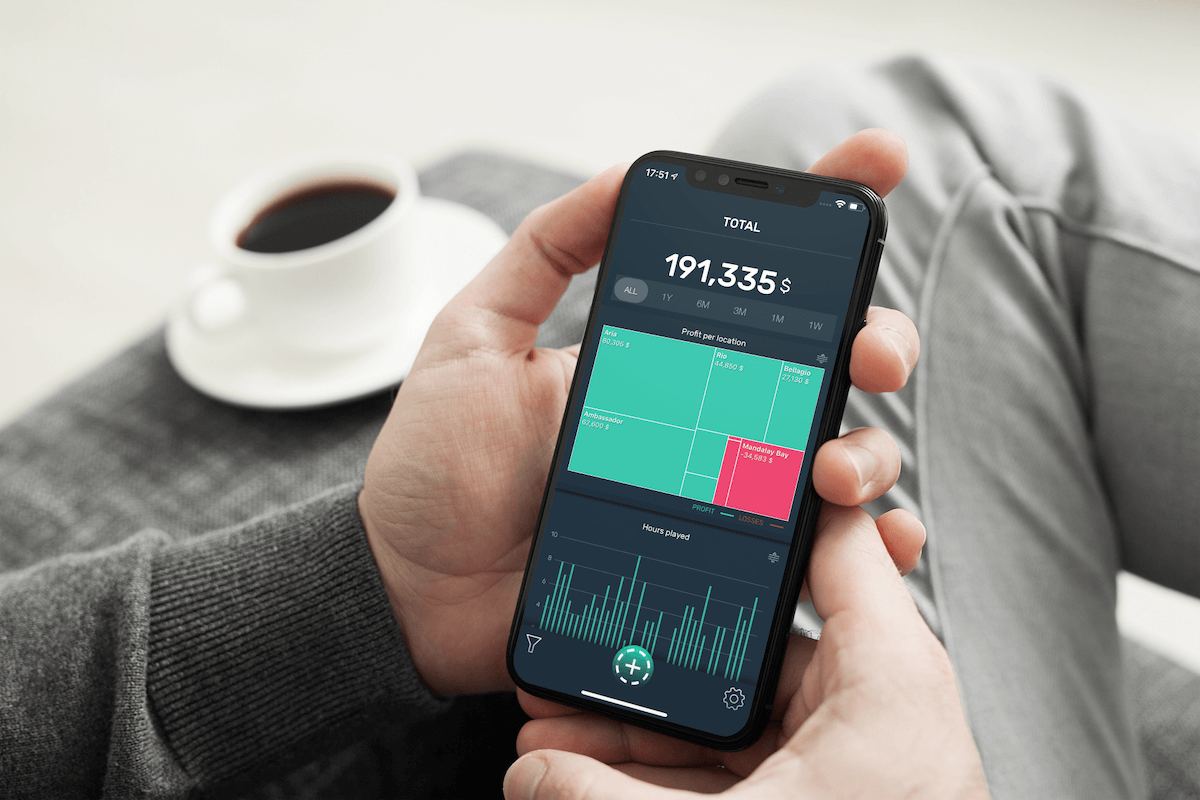
Use Poker Stack to record buy-ins, re-entries, cashes, format, field size, and notes. A tournament player who only remembers big scores will usually underestimate the cost of re-entries and dry spells.
What to track after each tournament
| Track | Why it matters |
|---|---|
| Buy-in and re-entries | Shows the real cost of the event |
| Format and field size | Separates small sit-and-gos, MTTs, turbos, and bounty events |
| Finish position and cash | Lets you calculate ROI over a real sample |
| Key bust-out hand | Helps identify repeat mistakes |
| Mental state | Shows whether fatigue, tilt, or late registration affected decisions |
If you want a clean record without spreadsheets, the poker bankroll tracker app guide explains what to record after each session.
Common tournament mistakes
- Playing the early stage like a cash game and stacking off too light.
- Ignoring antes and letting your stack shrink without stealing.
- Calling all-ins too wide on the bubble.
- Using the same strategy for turbos, deep stacks, satellites, and bounties.
- Re-entering without counting the real cost.
- Reviewing only bust-out hands and ignoring earlier missed steal spots.
Better tournament strategy is usually boring before it becomes profitable. Know the stage, count the big blinds, choose the right target, and keep records that tell the truth.
FAQ
What is the best online poker tournament strategy?
The best online poker tournament strategy is to adjust by stack size and stage. Play solid ranges early, steal more when antes arrive, apply bubble pressure carefully, and respect ICM at final tables.
How do you win poker tournaments more often?
You win more often by making fewer stage mistakes. Protect chips early, fight for blinds and antes in the middle, pressure the right players near the bubble, and avoid loose calls for your tournament life.
How should beginners play poker tournaments?
Beginners should start with tight position-aware ranges, simple bet sizing, and clear stack-size rules. Learn what changes at 50bb, 30bb, 20bb, and under 10bb before studying advanced final table spots.
What is ICM in poker tournaments?
ICM, or Independent Chip Model, estimates the money value of a tournament stack based on payouts and remaining players. It matters most near bubbles and final tables, where survival and pay jumps change decisions.
How many buy-ins do I need for poker tournaments?
Many regular MTT players use at least 100 average buy-ins, with more for large-field, turbo, or high-variance schedules. If your average buy-in is $20, a $2,000 bankroll is a practical floor.
Should I play tighter on the bubble?
It depends on your stack. Big stacks can often pressure players who want to cash. Medium stacks must avoid loose calls against bigger stacks. Short stacks should use fold equity before they are blinded out.
Related Poker Stack reading
Poker bankroll management: cash and tournament rules Mystery bounty strategy: when to chase envelopes
Read our blog