 What to record after every poker session
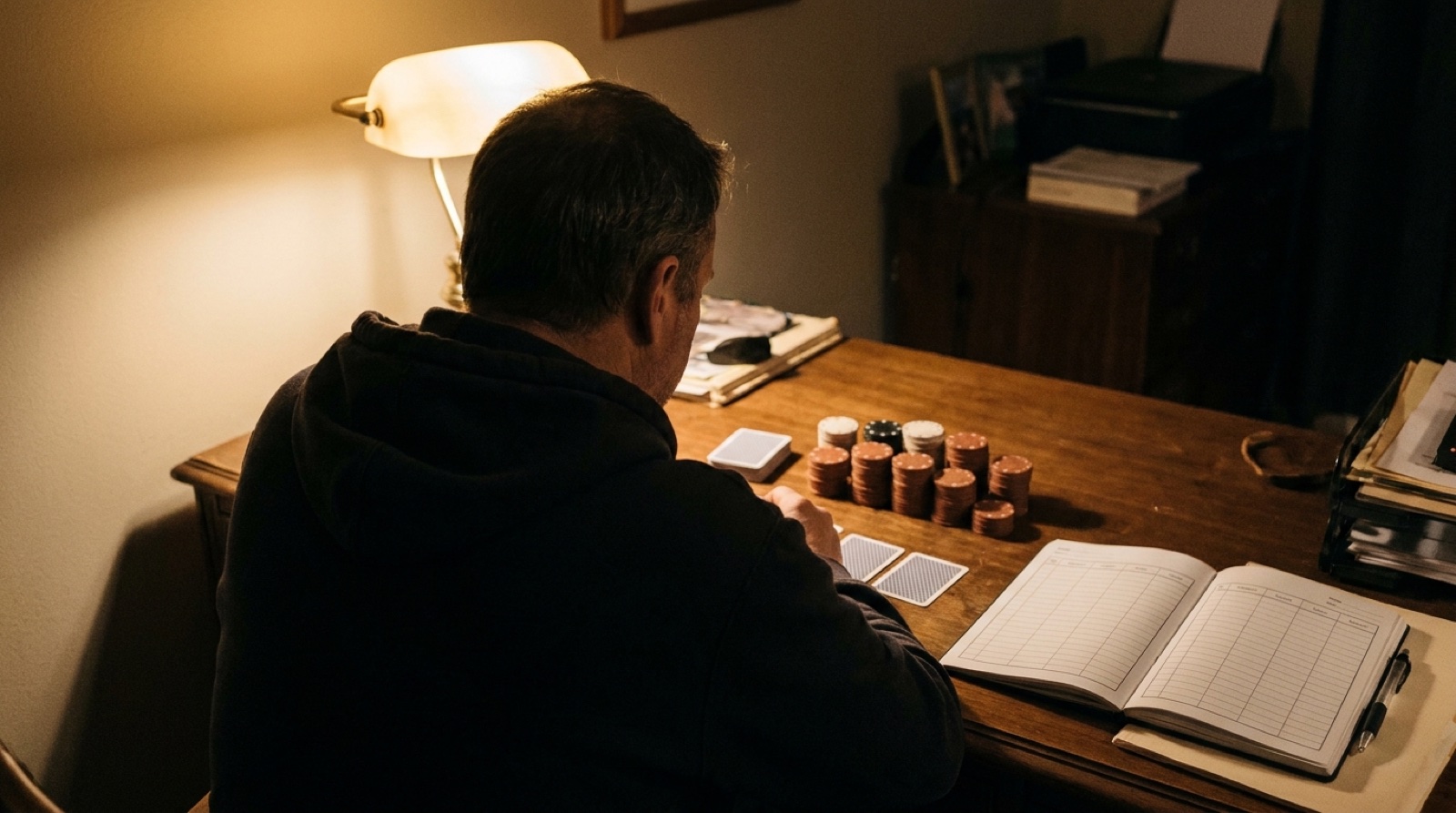
A poker downswing log helps you review more than the final result. It cannot predict your next session or prove your true win rate from a handful of games. It can show what you played, how you chose the game, and whether you followed your plan.
When losses pile up, memory tends to focus on the worst hands. Record details while they are fresh. Poker outcomes vary: variance describes how results depart from an expected average. That definition does not mean every losing run is harmless variance. Game selection, skill, rake, and decisions still matter.
What to record after each session
Keep the log short enough that you will actually complete it. Capture these fields:
- Date, format, and stakes: include cash or tournament, game type, and the limits you played.
- Time and volume: hours, hands or tournaments when available, and any long breaks.
- Money in and out: buy-ins, rebuys, cash-outs, tournament entries, re-entries, and fees. Separate the game result from travel, food, or other trip costs.
- Game quality: table or field notes, seat changes, lineup changes, and why you stayed or left.
- Decision notes: mark a few hands worth reviewing. Write the situation and your reasoning, not just “bad beat.”
- State and plan: focus, fatigue, frustration, any stop-loss or quitting decision, and whether you followed your pre-session bankroll rules.
Track rake or tournament fees where you can. Costs affect the result you keep; PrimeDope’s variance guide also explains why rake matters when interpreting a win rate. Avoid treating a short sample as a verdict. PokerNews’ bankroll-management introduction is a useful primer, but your own limits should reflect your format, finances, and risk tolerance.
Separate the result from the review
At the end of the session, write down the result once. Then answer two separate questions: “What did I earn or lose?” and “What did I learn about the game and my decisions?” A losing session can include sound decisions; a winning one can still contain avoidable errors.
Do not use one dramatic hand as the whole explanation. Save hands for focused review and look for repeated patterns across sessions. If your notes show that you are playing tired, choosing worse games, or ignoring a pre-set stop point, those are actionable observations. If the notes show no clear pattern yet, that is a reason to gather better records, not to invent certainty.

Download Poker Stack Now
"PokerStack is THE app you need to have as a live poker player."
Poker.com


Use the log before changing stakes
Write your bankroll rules before you play, including what would make you move down, pause, or seek a second opinion. Those rules should be conservative and specific to your circumstances. A log is not permission to keep playing through financial stress, and it is not a substitute for professional support.
After five sessions, review the entries together. Five sessions are a prompt to review your process, not a statistically reliable sample of your ability. Check whether the stakes and game type matched your plan, whether costs were recorded, and whether the same decision or game-selection concern appeared more than once. If you are unsure, pause rather than chase losses or make a rushed move up.
For a broader record-keeping routine, see our guide to what to record after every session, the bankroll rules for deep-stack games, and our explanation of why win-rate sample size matters. The complete poker bankroll management guide adds a wider planning framework.
Related Poker Stack reading
What to record after every poker session Poker win rate and sample size
If gambling is causing harm or financial pressure, stop playing and seek support. The National Council on Problem Gambling lists help options. Log your next five sessions before making a major bankroll decision. Use the notes to review your process, not to predict the next result.
Read our blog