 Live poker checklist: bankroll, stop loss, table selection, and notes
Good poker table selection is a money decision. If you stay in a bad seat because you are comfortable, tired, or too proud to move, you are choosing a harder session than you need.
The table change button is boring, which is why players underrate it. It does not feel like a big bluff or a hero call. It feels like admin. But live poker rewards the player who finds the better lineup, protects the bankroll, and leaves enough notes to know what happened later.
That is the whole point. A better table does not guarantee a win. It gives your decisions a cleaner chance to make money.
Why table selection matters more than one pretty hand
Most players review the biggest pot and ignore the table. That is backwards. Your seat can affect every hand before you even look down at cards.
A good lineup can give you looser calls, softer river decisions, slower pressure, and more chances to value bet. A bad lineup can give you strong players on your left, short stacks that kill implied odds, one tough regular who keeps isolating, and a rake structure that eats small edges.
888poker's table selection guide makes the basic point well: game choice is part of the skill. You can play the same hand better at one table than another because the people and stacks around you change the whole session.
This is why a table change belongs in your session review. If you track only buy-in and cashout, you miss the part where the session became hard.
The signs your table is not worth defending
You do not need a perfect table. You need a table that gives you a real reason to stay.
Start watching for these signs:
- The biggest stacks are disciplined players and they have position on you.
- The weaker players are short-stacked, tired, or about to leave.
- The table is tight enough that the rake makes small pots ugly.
- You are no longer getting paid on value hands.
- You feel yourself playing hands just because you waited too long for action.
- A better table is open and you are ignoring it because moving feels awkward.
One of those signs is not always enough. Three of them together should get your attention. The mistake is treating your first seat like a commitment.
Turn table changes into a bankroll habit
Bankroll management is usually taught as buy-ins and stakes. That matters, but it is incomplete. Upswing Poker's bankroll management guide focuses on having enough buy-ins for the game you choose. The next step is asking whether the game you chose still deserves your money.
For live poker, I like a simple rule: review the table before you add on, reload, or extend the session.
Ask yourself:
- Would I choose this table again if I just walked into the room?
- Who is the reason I am sitting here?
- Who has position on me?
- Is my hourly goal realistic in this lineup after rake?
- Would changing tables lower variance or just make me feel busy?
If you cannot answer those questions, you are not making a poker decision. You are drifting.
The stop-loss problem players avoid
Table changes and stop losses are connected. Players often stay too long at a bad table because leaving feels like accepting defeat. Then they call it variance later.
A stop loss should not only be a number. It should also be a decision point. If you are down two buy-ins and the table has gotten worse, moving or leaving is not cowardly. It is bankroll protection.
888poker's stop-loss advice is useful here because it treats quitting as a control decision, not a shame decision. The same logic applies to switching tables. You are allowed to stop paying for a bad spot.
This is where Poker Stack helps. After a session, log the table quality, the reason you stayed, and the point where you should have moved. The app is not there to judge one result. It is there to make the pattern harder to ignore.
A quick table-change checklist
Use this before you request a move:

Download Poker Stack Now
"PokerStack is THE app you need to have as a live poker player."
Poker.com


- Lineup: Is there at least one player creating clear value?
- Position: Are the toughest players acting after you too often?
- Stack depth: Are the weaker players deep enough to matter?
- Rake: Is the table playing small pots that make the rake painful?
- Mood: Are you chasing action because the session is boring?
- Options: Is another table visibly better right now?
If the answer points toward moving, move. If you stay, write down why. That one note is often more honest than the cashout number.
What to write in your session log
Do not write an essay. You want enough detail to review the decision later.
- Table was good, stayed because two loose players had deep stacks.
- Table got worse after seat 4 left, should have changed after first reload.
- Tough player on my left isolated too much, requested move after 90 minutes.
- Stayed because waitlist was long, but the hourly expectation was probably poor.
Those notes make your results useful. They also connect directly to your bankroll. If a stake looks profitable only when you ignore bad table selection, you do not have a real win rate yet.
For a fuller review routine, read the cash game session review checklist and the live poker checklist. If deeper games are part of the problem, the deep-stack bankroll guide is the next place to look. If rewards or rake are pulling you into worse games, read the rakeback brain trap.
Do not confuse discipline with being scared
Changing tables is not the same as avoiding tough spots. Sometimes you should stay in a harder game because the lineup is still good, the stacks are right, or one player is making enough mistakes to justify the variance.
The goal is a table you can defend with reasons, even when the game is uncomfortable.
That matters for safer play too. Responsible Gambling Council's safer-play guidance recommends setting limits and keeping gambling decisions intentional. Poker players like to think skill makes them immune to that advice. It does not. Tracking your table-change decisions is one way to keep the session from turning automatic.
Tilt control matters here as well. 888poker's tilt-control guide talks about how emotion can push players into bad decisions. In a live room, one quiet tilt decision is refusing to move because you want to win your money back from the same seat.
Make the table change button part of the session
The best live players are not always doing something dramatic. A lot of their edge comes from refusing bad games, spotting better ones, and recording enough detail to learn from the night.
Before your next session, decide what would make you change tables. During the session, check that reason before you reload. After the session, write one note in Poker Stack about whether you made the move soon enough.
That habit will not show up in one hand history. It will show up across twenty sessions, when you can finally see whether you keep paying for bad seats.
Live poker checklist: bankroll, stop loss, table selection, and notes
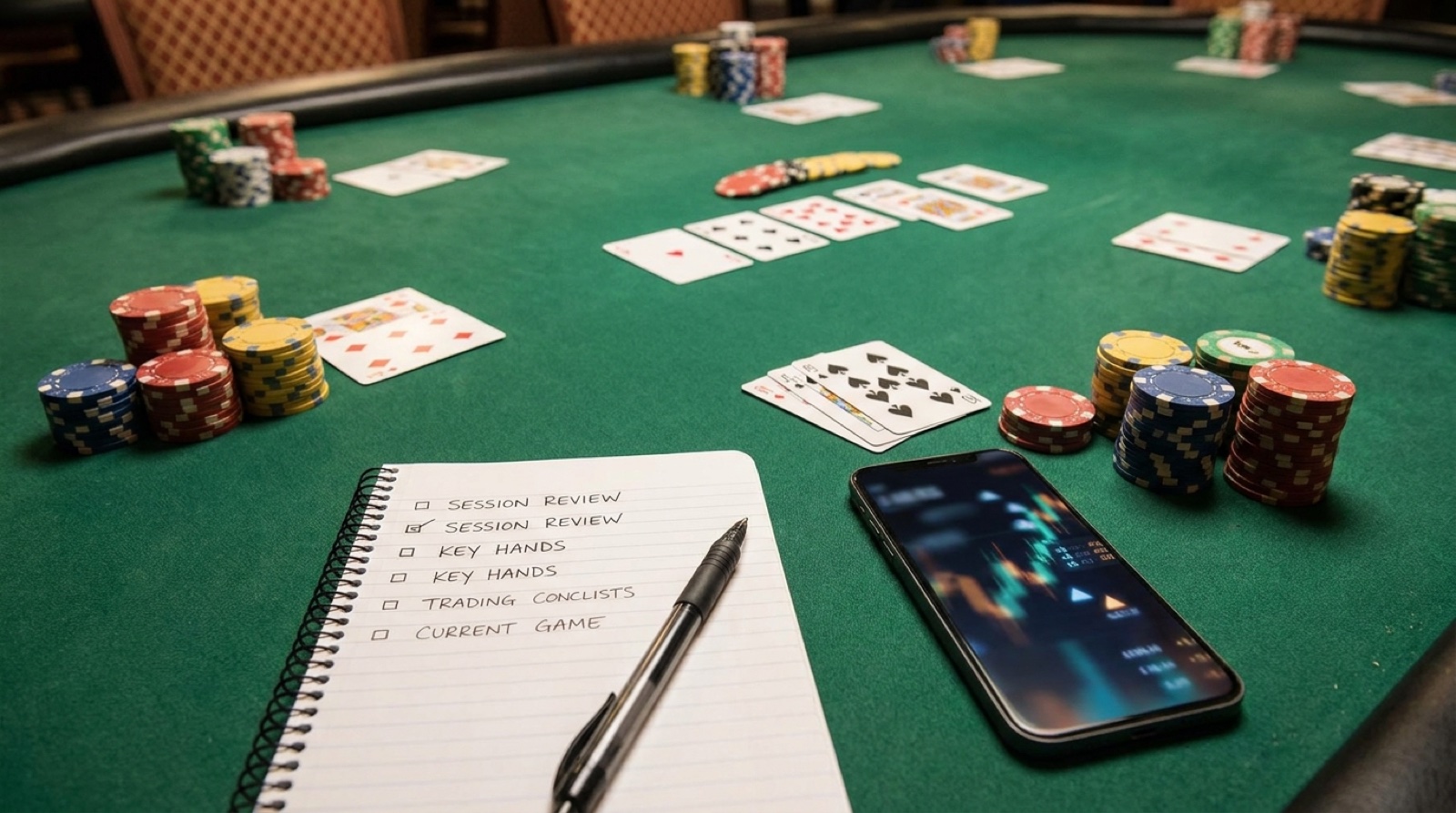 Poker session review checklist for live cash games
Read our blog