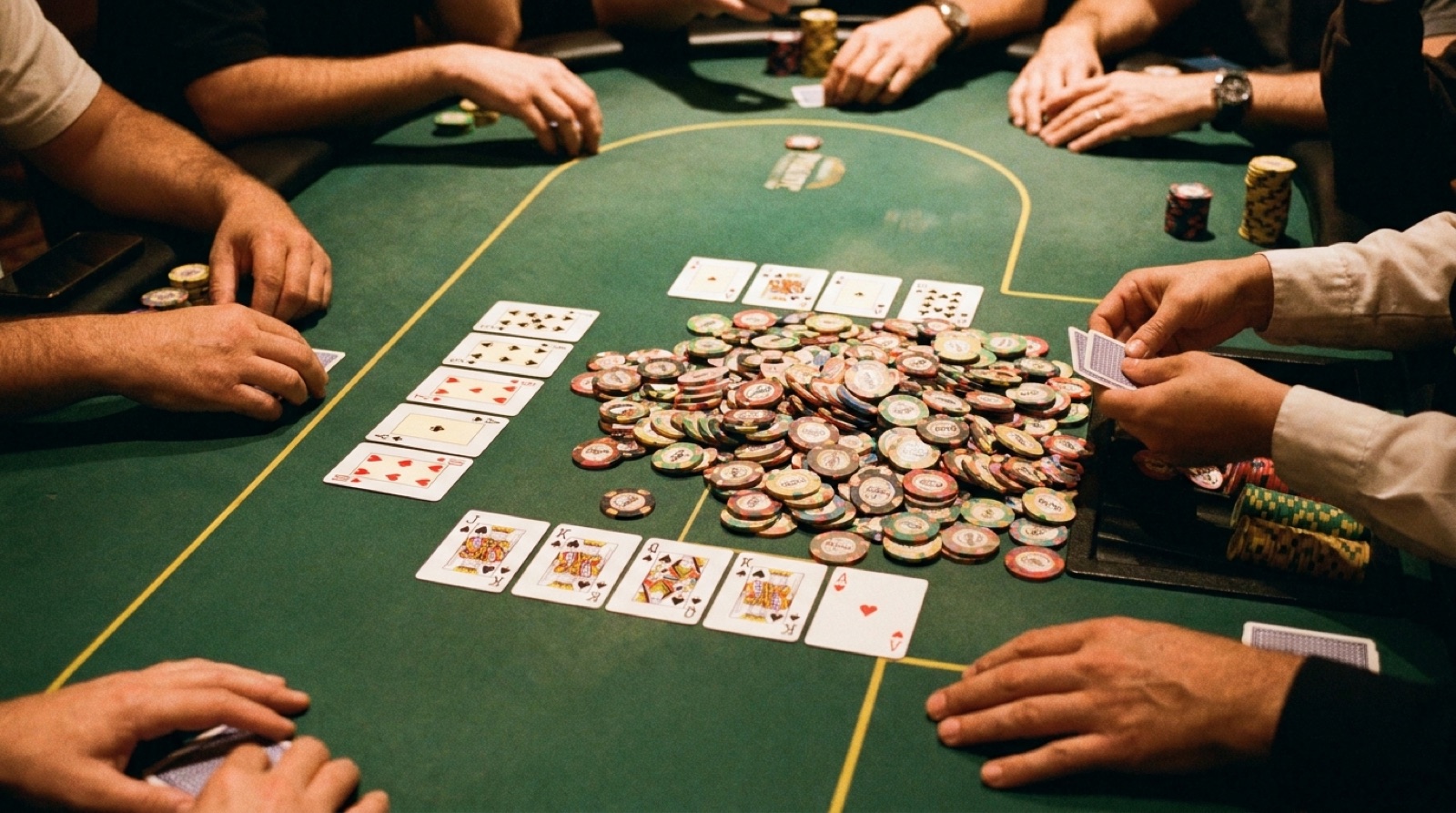
 Scoop or die: the double board bomb pot strategy guide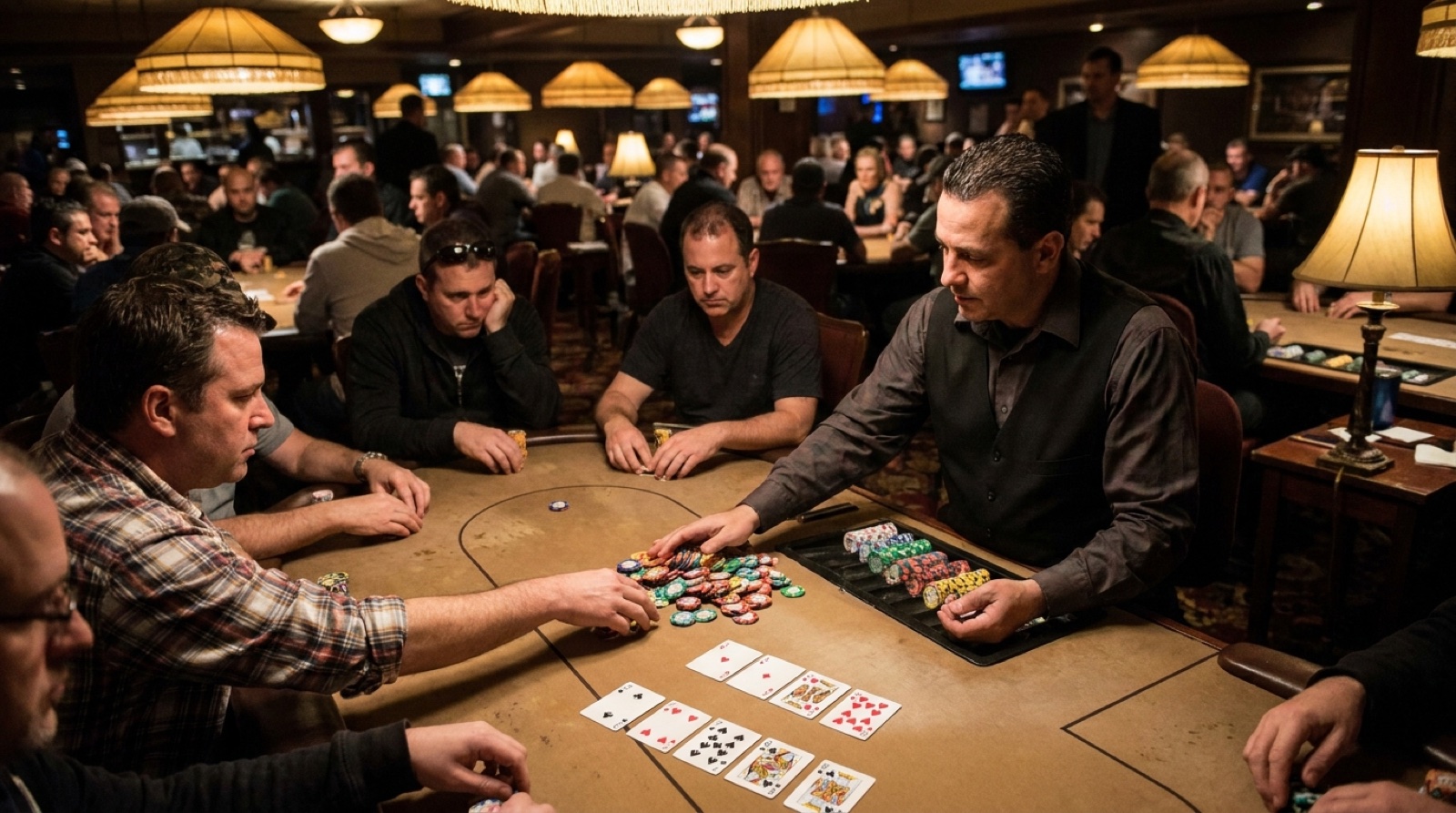
Split pot poker strategy gets expensive when you treat every half-pot draw like a victory. In Omaha hi-lo, double-board bomb pots, and other split games, the real money is made when you can win half the pot almost for free while still drawing live to the other half.
That is the freeroll. You are not guessing. You are already protected on one side of the pot, and the next decision is whether the other side is worth pressure, calls, or a thin value bet.
What a freeroll really means
A freeroll is a spot where two players appear to have the same made hand for one half of the pot, but one player has extra ways to win more. In classic Omaha, that might be the same nut straight with one player holding a flush redraw. In Omaha hi-lo, it may be a locked low with a live high draw. In a double-board bomb pot, it can be the effective nuts on one board plus a draw or pair upgrade on the other.
The WSOP Omaha rules are a good reminder that Omaha players must use exactly two hole cards and three board cards. That detail matters because many freerolls vanish when the hand is checked correctly. A draw that looks live in Hold'em may be dead in Omaha because the two-card requirement blocks it.
In double-board pots, the same discipline applies. If you have not already read the Poker Stack guide to double board bomb pot strategy, start there. The short version is simple: playing for half while someone else plays for all of it is how good players quietly tax your bankroll.
Start with the locked half
Before you think about aggression, ask one dry question: how secure is my half?
If your half can still be counterfeited, you are not freerolling. You are gambling. A low can be duplicated. A straight can be chopped by the same straight. A flush can be dominated. A full house on one board may look safe until paired boards and blocker effects are counted properly.
The PokerNews Omaha rules guide explains the basic Omaha hand-construction problem well. For freerolls, the advanced point is that you should count the hand twice: first for the half you believe is yours, then for the half you are trying to steal, value bet, or realize.
Pressure only when the second half has equity
Bad players say, "I cannot lose the whole pot, so I call." Good players ask whether the extra money going in can win the other half often enough.
Say you are locked for low in Omaha hi-lo, but your high draw is weak. Calling a pot-sized bet may still be bad if you are getting only a refund on half and have almost no chance to scoop. This is where many players confuse emotional safety with expected value.
The Upswing Poker pot odds guide is useful for the math habit: compare the price you pay with the part of the pot you can actually win. In split games, the "pot" is not always the whole pot. Sometimes your real target is only the contested half.
Double-board freerolls are where stacks disappear
Double-board bomb pots create strange freerolls because players see two boards and think in headlines. Top two on one board. Nut straight on the other. Set plus draw. The problem is that the pot does not care which hand sounds prettier. It pays the player who can scoop or force bad calls from people stuck defending half.
One strong pattern is the locked-board plus pressure-board spot. You hold the effective nuts on board one. On board two, you have a strong draw, blockers, or a hand that can improve to the winner. Your opponent is also strong on board one but weak or capped on board two. That is a freeroll candidate.

Download Poker Stack Now
"PokerStack is THE app you need to have as a live poker player."
Poker.com


This is also where bankroll tracking matters. Bomb pots and split games add variance fast, even when you are playing well. Track them separately in Poker Stack or at least tag the session notes. Your normal $2/$5 win rate can look broken if you mix ordinary hands with high-variance bomb pot volume and never separate the results.
Do not overplay the word locked
Many freeroll mistakes start with lazy language. "I have the nuts" is not enough. Which board? Which half? Can the river counterfeit it? Is the same hand available to someone else? Are your redraws clean?
The Card Player Omaha hi-lo rules show why low hands can split in awkward ways. A player can be quartered, where they win only half of the low half. If you miss that, you may think you are freerolling while actually fighting for a tiny refund.
That is the ugly truth of split-pot poker: a hand can look safe and still be a bankroll leak.
A quick freeroll checklist
- Can I name the exact half of the pot I already control?
- Can that half still be counterfeited or duplicated?
- What cards let me win the other half?
- Are those outs clean under the exact rules of this game?
- If I bet, am I getting called by worse, folding out better, or building a pot I only half-own?
- If I call, am I paying for the whole pot while drawing at only half?
Use the checklist before the emotional part of the hand takes over. Split pots create a weird comfort because you rarely feel dead. That comfort is expensive.
Track freeroll spots like a separate game
Advanced live poker is full of spots where your edge is real but noisy. Freerolls are a perfect example. You can make the right pressure bet, get called by a worse half-pot hand, miss the scoop, and still feel as if nothing happened. Over one session, that is noise. Over 80 sessions, it is a pattern.
Poker Stack is useful here because it lets you record the boring truth after the adrenaline fades. Add notes like "double-board bomb pots included," "O8 split game," or "freeroll spots, high variance." Then review the session against similar formats instead of blaming your whole bankroll plan.
If you are moving from Hold'em into action games, read why 5-card PLO is pulling pros away and the PLO6 variance guide. The same lesson keeps repeating: more cards create more hidden equity, and hidden equity punishes players who stop counting too early.
The practical edge
The practical edge in freeroll spots is not heroism. It is patience with the details. Lock the hand construction. Separate the protected half from the contested half. Count clean outs. Bet when your opponent is paying full price for half a pot. Slow down when your "locked" side is not actually locked.
Split-pot poker rewards players who can stay clear while everyone else is celebrating a chop. Half the pot is sometimes enough. The money is in knowing when it is not.
Related Poker Stack reading
Scoop or die: the double board bomb pot strategy guide The bloodbath variance of PLO6: a survival guide
Read our blog